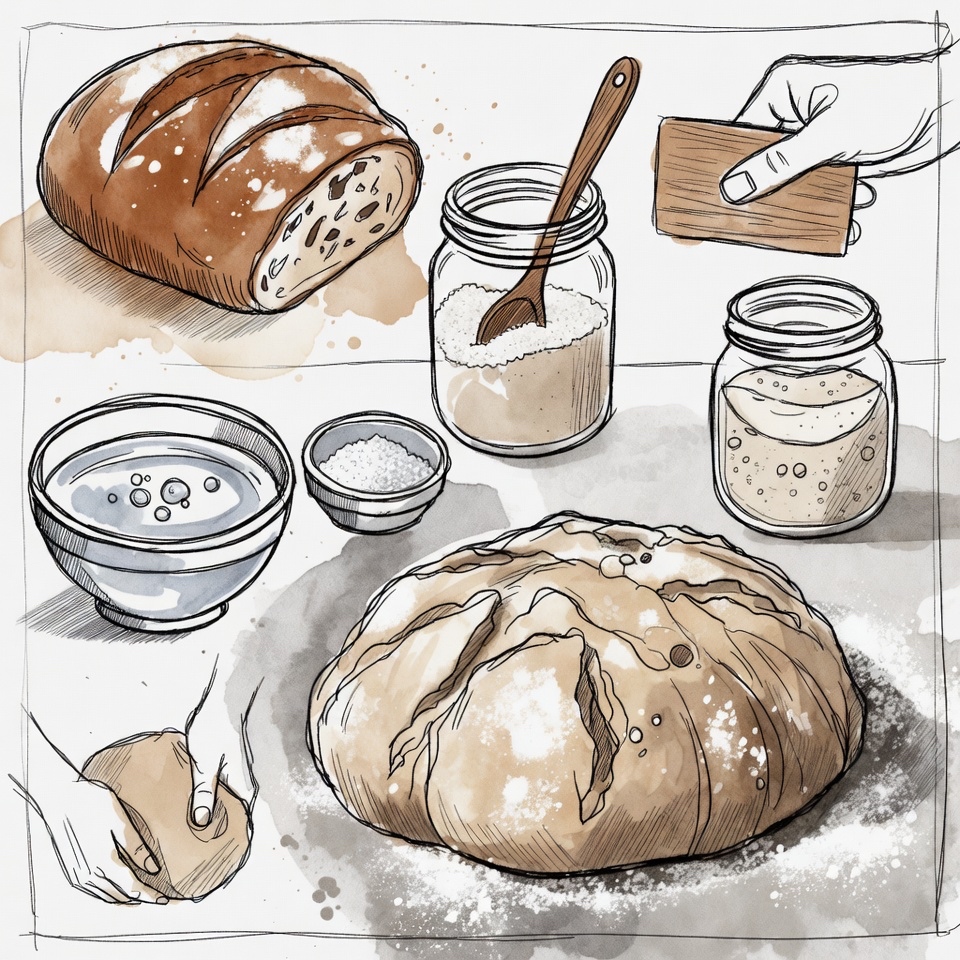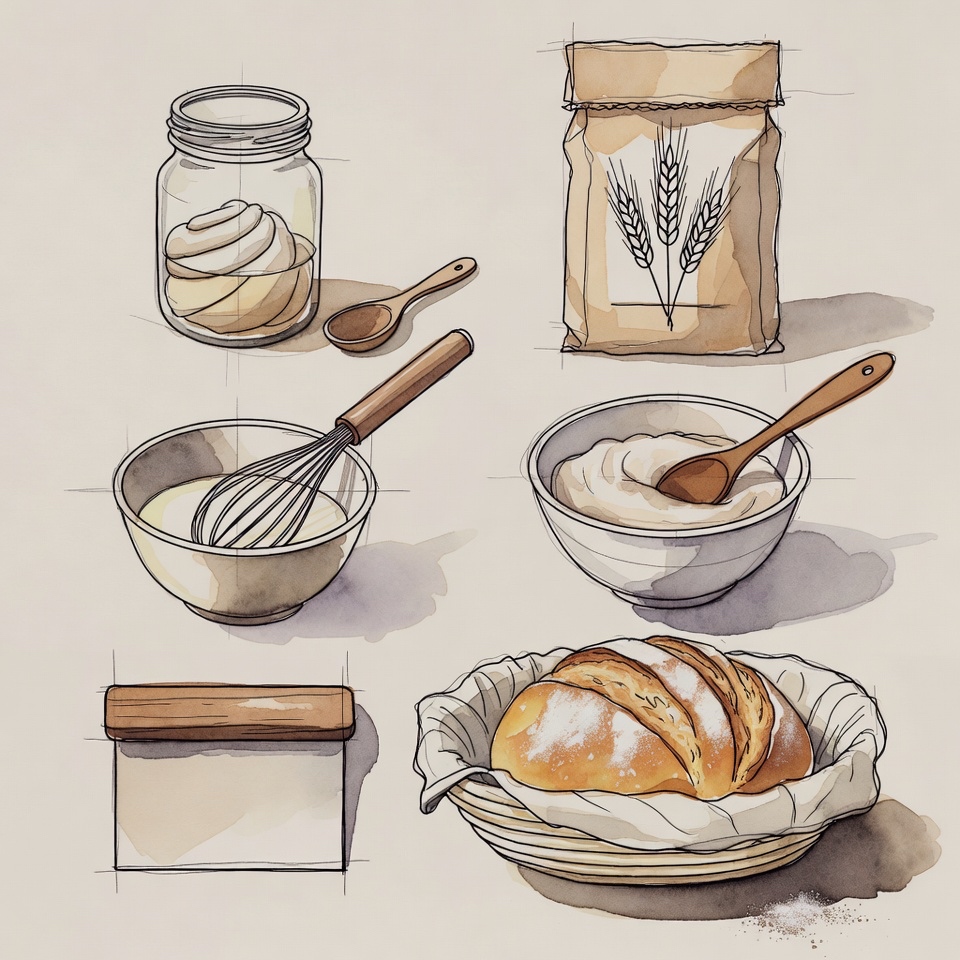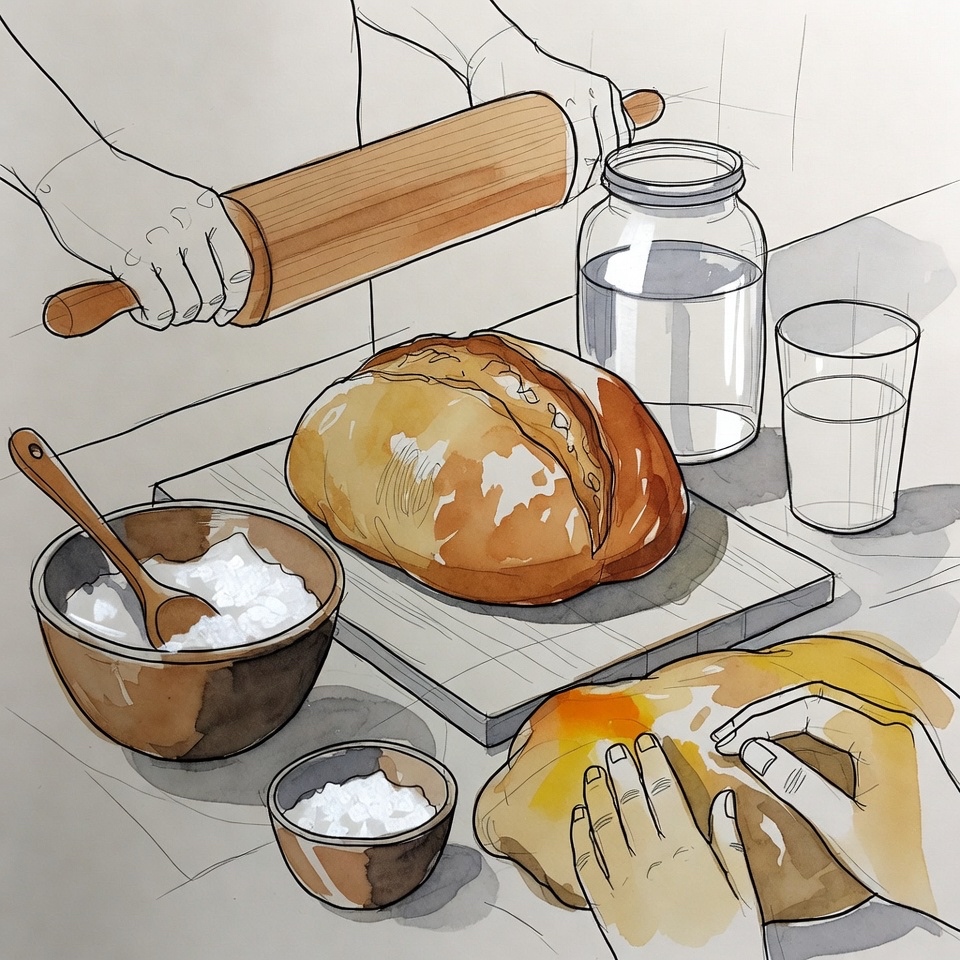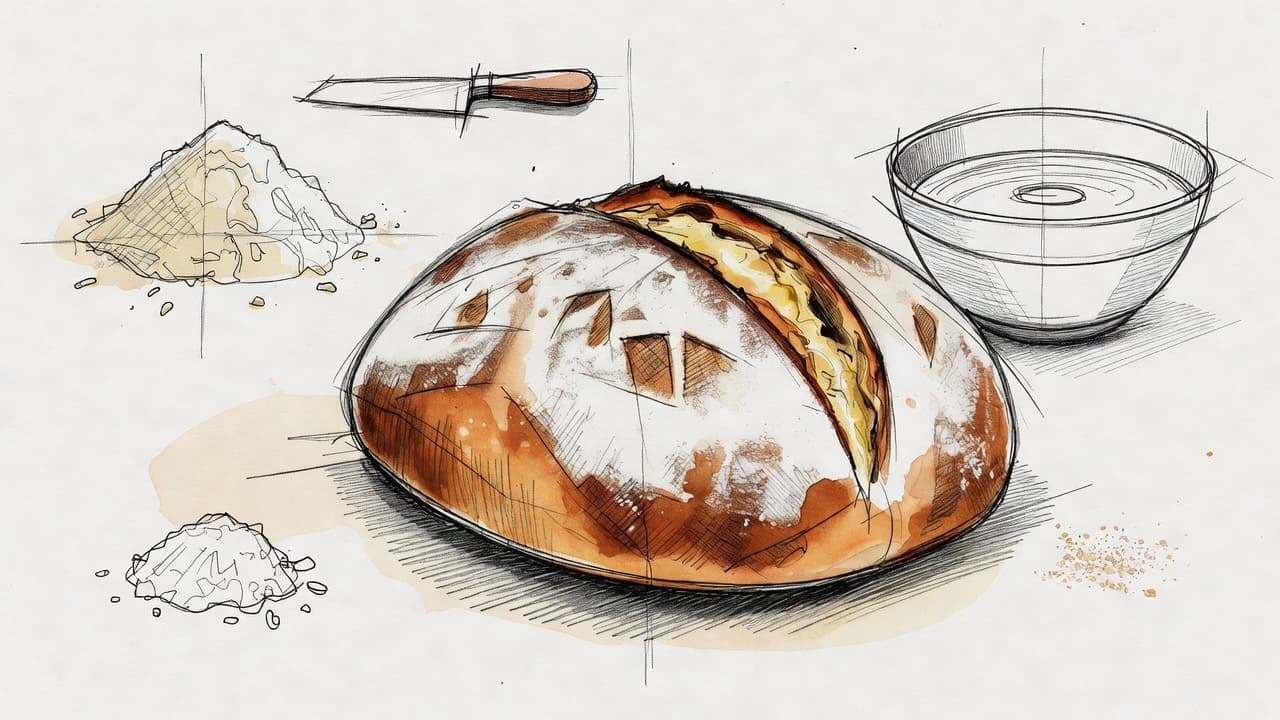
Dense sourdough loaf
Why your sourdough loaf is dense, gummy, flat, or heavy, and how to diagnose fermentation, starter strength, shaping, and baking.
A dense sourdough loaf is usually a process problem, not a recipe problem. The common causes are under-fermentation, weak starter, poor gluten development, rough shaping, or a bake that never gets enough heat and steam.
most likely causes
- Weak starter: it is not doubling predictably before you mix.
- Under-fermentation: bulk ended before the dough had enough gas and strength.
- Too much flour during shaping: the surface tightens but the interior stays compressed.
- Too little steam: the crust sets before the loaf can expand.
- Cutting too early: warm crumb looks gummy even when the loaf is baked.
diagnosis checklist
Pick your state and product — instant verdict before market day.
- Confirm your starter doubles in 4-8 hours after feeding.
- Watch dough rise during bulk, not the clock. Aim for roughly 40-60% rise for most home kitchens.
- Use stretch-and-folds until the dough feels elastic and smoother.
- Shape with tension but do not crush all the gas out.
- Bake covered in a Dutch oven or cloche for the first 20 minutes.
the control bake
Before changing five things at once, bake the beginner sourdough boule exactly once. If that loaf works, your issue is probably hydration or inclusions. If it is still dense, fix starter strength and fermentation first.
Where to go next
Once your basic loaf is reliable, move toward high hydration sourdough or inclusion loaves from top sourdough add-ins and inclusions.
Crosodo Journal entries are recipe, craft, and cottage-food notes for home bakers. Recipes assume an active starter and basic equipment. Cottage food sales are governed by your state's law — start with the free state directory, check a product with Can I sell this?, or grab a label template. Not legal advice.