
Rhode Island Cottage Food Law PDF 2026 — Full Legal Text + Annotations
Full statute text, allowed foods, registration, sales cap 50000, and all 5 Rhode Island counties with zoning + health department links. 26-page PDF with official sources. Free preview below — buy the complete guide for $44.
This page shows the first 2 pages + statute excerpt. One-time $44 · Yours to keep · Stripe checkout · Guide (PDF) emailed with receipt.
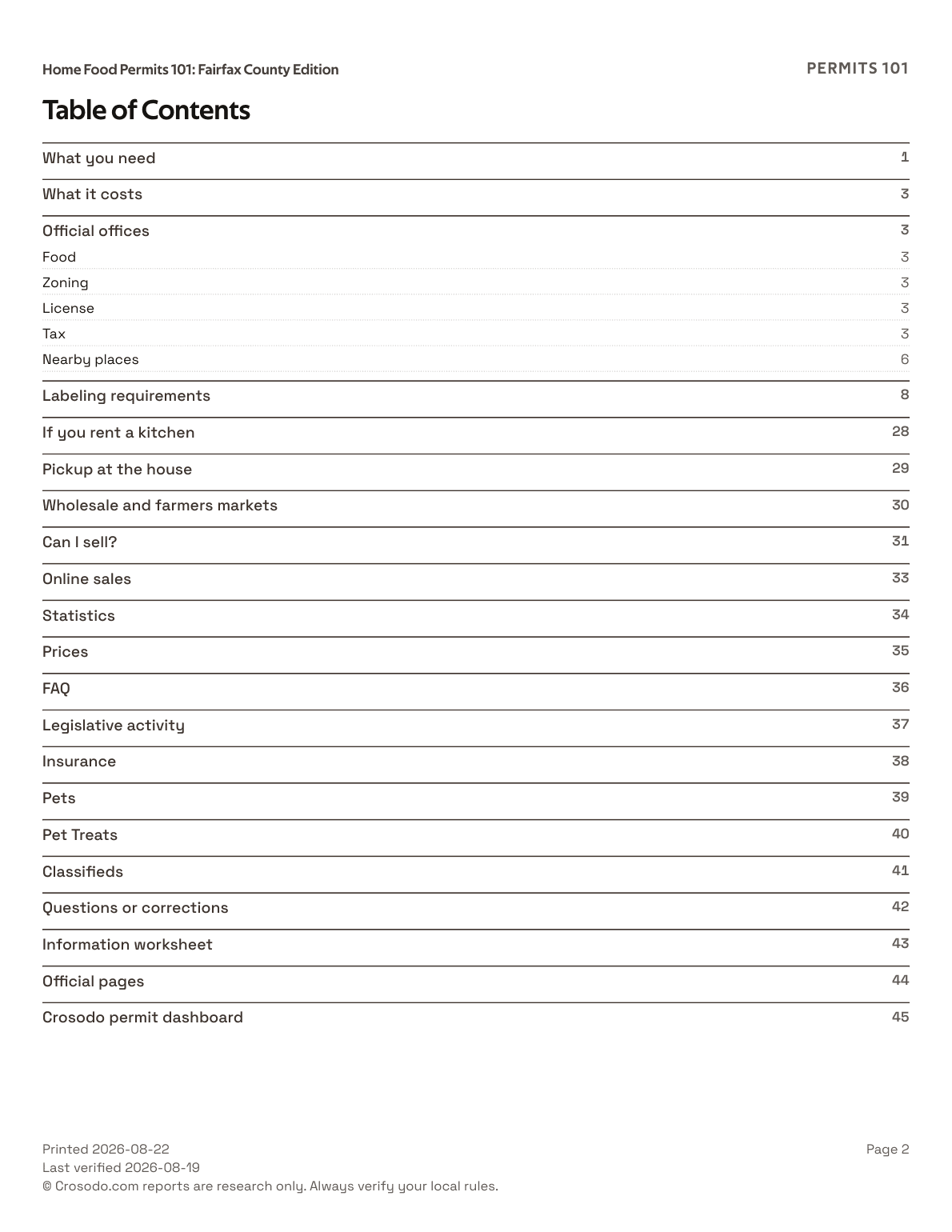
- Full Rhode Island statute text with key provisions and official citation
- Allowed and prohibited foods, labeling rules, sales cap (50000)
- Registration and permit steps with direct state-agency links
- All 5 Rhode Island counties with zoning + health department links
- 26-page guide with every official source URL, licensed to your address
What exactly am I buying?
The complete Rhode Island License & Permit Guide — not the free 2-page preview above.
How do I receive it?
Stripe checkout. We email a cover letter, paid receipt, and the guide (PDF) licensed to your address.
Is it current?
Every report lists its official sources so you can verify against the current statute. See also the research-verified Rhode Island guide.
Not ready? Get free Rhode Island cottage-food updates instead.
Rhode Island General Laws, Title 21 – Food and Drugs, Chapter 27 – Sanitation in Food Establishments, Section 21-27-6.2 (Cottage Food Manufacture)
Verbatim Excerpt§21-27-6.2. Cottage food manufacture. Notwithstanding the other provisions of this chapter, the department of health shall register cottage food manufacture and the sale of the products of cottage food manufacture direct to consumers whether by pickup or delivery within the state, provided that the requirements of this section are met. (3) Cottage food manufacture shall be limited to the production of baked goods that do not require refrigeration or time/temperature control for safety, including but not limited to: (i) Double crust pies; (ii) Yeast breads; (iii) Biscuits, brownies, cookies, muffins; and (iv) Cakes that do not require refrigeration or temperature-controlled environment; and (v) Other goods as defined by the department. (4) Each cottage food manufacturer shall be registered with the department of health and shall require a notarized affidavit of compliance, in any form that the department may require, from the applicant that the requirements of this section have been met and the operation of the kitchen shall be in conformity with the requirements of this section. Prior to the initial registration, each cottage food manufacturer is required to successfully complete a Food Safety Manager Course, any American Standards Institute approved food handler course, or any other course approved by the department. (5) No such operation shall engage in consignment or wholesale sales. The following additional locational sales by any such cottage food operation shall be prohibited: (i) Grocery stores; (ii) Restaurants; (iii) Long-term-care facilities; (iv) Group homes; (v) Daycare facilities; and (vi) Schools. Advertising and sales by internet, mail, and phone are permissible, provided the cottage food licensee or their designee shall deliver, in person, to the customer within the state. (6) Total annual gross sales for a cottage food operation shall not exceed fifty thousand dollars ($50,000) per calendar year.
Source: webserver.rilegislature.gov/Statutes/TITLE21/21-27/21-27-6.2.htm →
Only non-refrigerated baked goods are allowed, including double crust pies, yeast breads, biscuits, brownies, cookies, muffins, and cakes that do not require refrigeration. No time/temperature control for safety (TCS) foods are permitted. The law is limited in scope compared to most states.
Any food requiring refrigeration or temperature control for safety (TCS foods) is prohibited. Wholesale/consignment sales and sales to grocery stores, restaurants, long-term-care facilities, group homes, daycare facilities, and schools are all prohibited. Products may not be sold outside Rhode Island.
Labels must include: name, address, and telephone number; ingredients in descending order of predominance by weight or volume; allergen information per federal and state requirements; and the statement 'Made by a Cottage Food Business Registrant that is not Subject to Routine Government Food Safety Inspection' in at least 10-point type in a clear and conspicuous manner (unless produced in a licensed commercial kitchen).
50000
Poor (IJ Grade D+)
5
Rhode Island Counties (5)
Cottage food registration usually happens at the county level. Click any county for local zoning, health department, and planning department links.
Where to verify Rhode Island's rules
Data compiled from primary sources. Cottage food laws change — verify with your state agency before relying on this information.
Cottage food laws are amended every year. This is a starting reference, not legal advice. Verify with Rhode Island Department of Healthand your local health department before relying on this data.