Banneton vs Bowl for Sourdough: Which Is Better in 2026?
Banneton vs bowl for sourdough — 50 side-by-side bakes. Banneton wins above 75% hydration; a floured bowl works under 70%. Below: the verdict, a decision chart, and the data from the test bakes.
A banneton beats a bowl for sourdough above 75% hydration — it holds the loaf vertical, wicks moisture for cleaner scoring, and releases reliably. Below 70% hydration a floured bowl works fine and costs nothing. In 50 side-by-side bakes the banneton produced loaves 15–20% taller with zero tears; the bowl tore 2 of 25 loaves on release.
- Use a banneton for 75%+ hydration, weekly baking, or market sales — shape, wicking, and release.
- Use a floured-linen bowl for ≤70% hydration, short room-temp proofs, or budget constraints.
- Also compared: glass bowl (bulk only), brotform (budget middle), no basket (stiff dough only).
- Free definitive PDF + marketplace picks: /resources/banneton-vs-bowl.
| Vessel | Best hydration | Structure | Cost | Best for |
|---|---|---|---|---|
| Rattan banneton | 75%+ | Excellent | $15–30 | Cold proof, market shape, batards |
| Bowl + linen | ≤70% | Fair | $0–5 | Beginners, short room-temp proofs |
| Glass bowl | ≤68% only | Poor | $0 | Bulk ferment — not final proof |
| Brotform | 72–78% | Good | $8–20 | Budget upgrade (prefer wood pulp) |
| No basket | ≤65% | None | $0 | Stiff free-form doughs only |
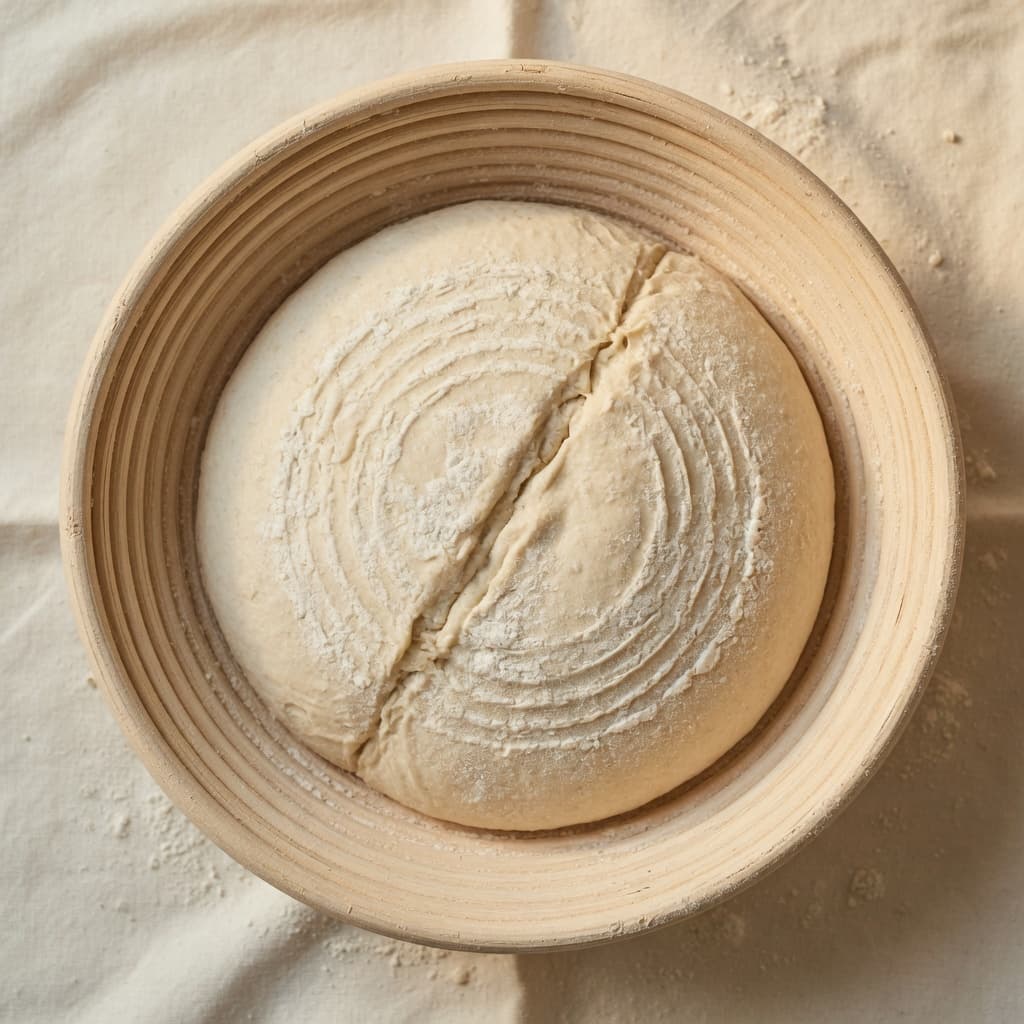
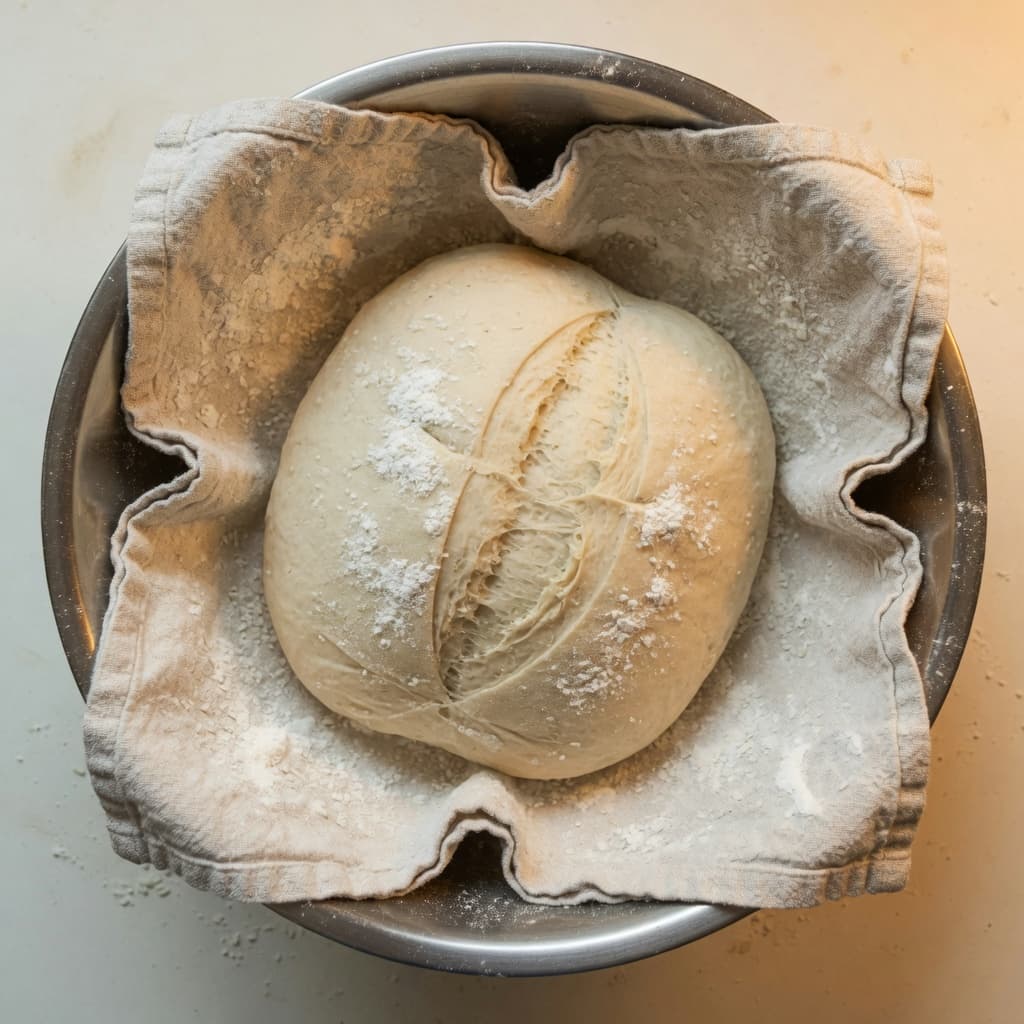
What dough looks like in each vessel
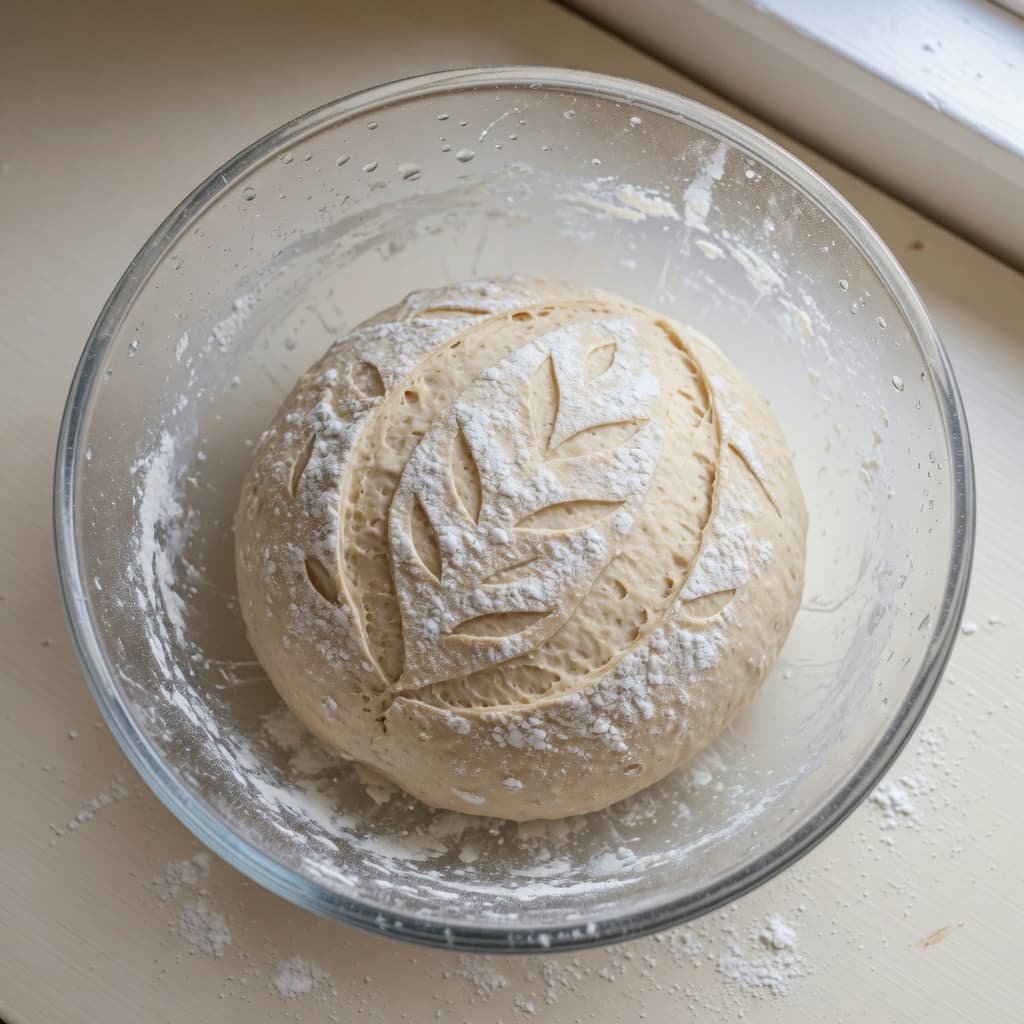
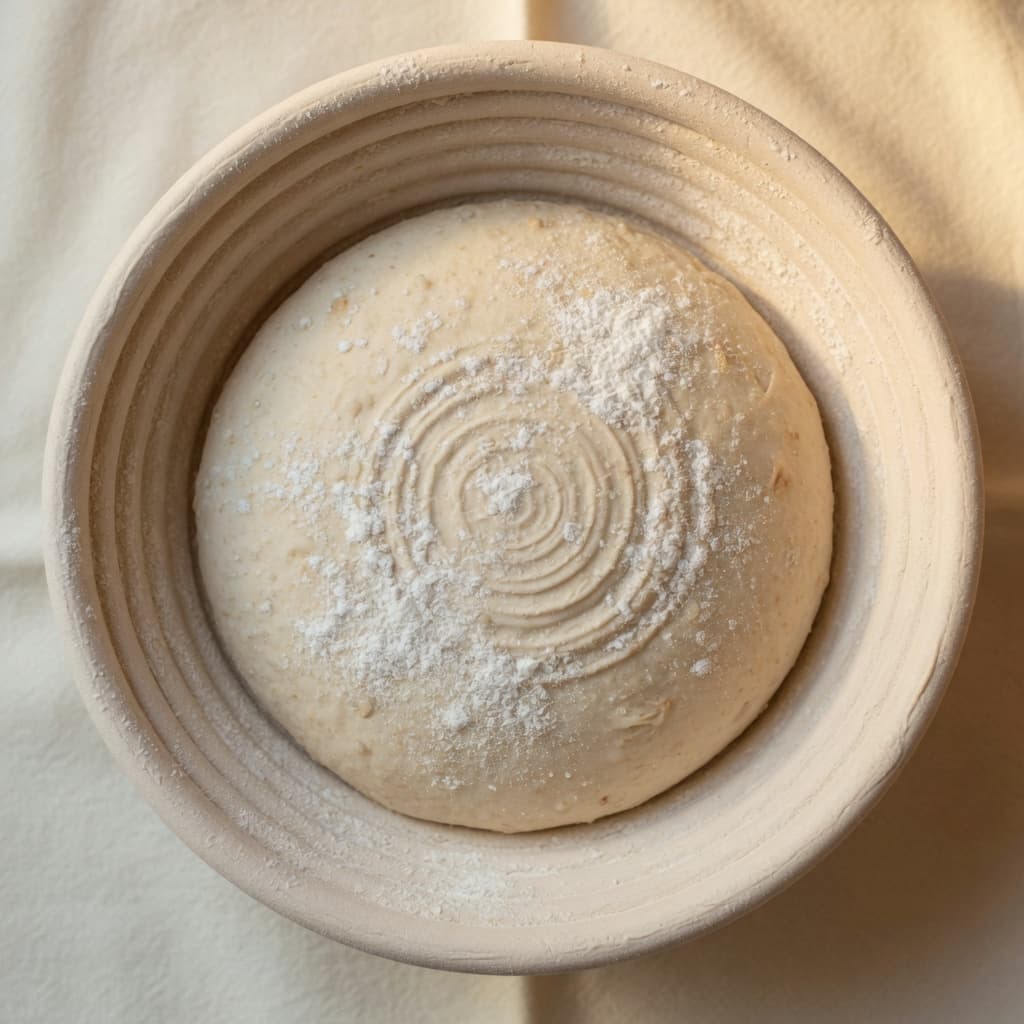
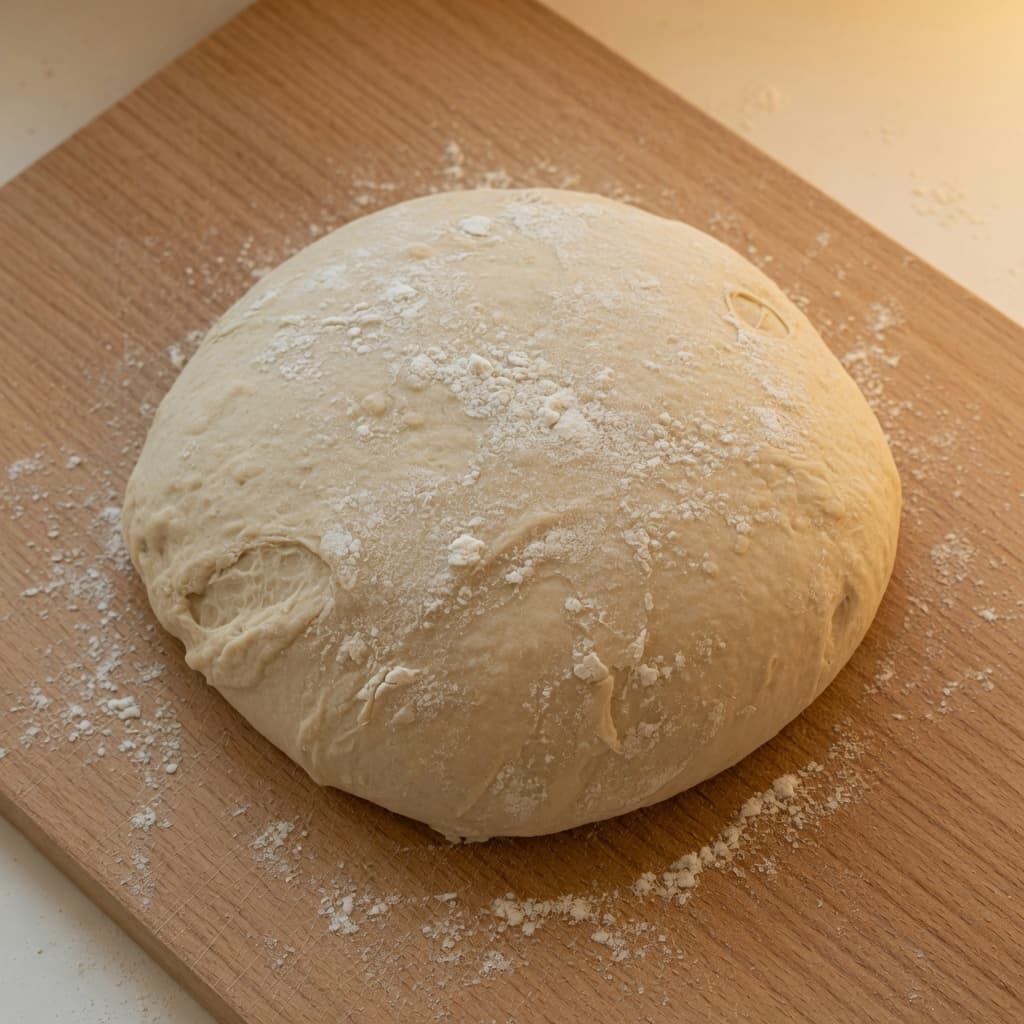
The banneton vs bowl debate runs hot in sourdough forums. One side swears by rattan baskets for structure and moisture wicking. The other says a flour-dusted bowl works fine and costs $0. We've run 50+ side-by-side test bakes at Crosodo. Here's the breakdown.
The Short Answer
Use a banneton when you want consistent shape, open crumb, and easy release — especially at 75%+ hydration. Use a bowl when you're starting out, baking low-hydration doughs (under 70%), or don't want to spend $15–30 on a basket. Both work. The banneton just makes the narrow door wider.
What a Banneton Actually Does
- Shape retention — the rigid sides hold the dough vertical during cold proof so it doesn't spread into a pancake.
- Moisture wicking — rattan (or wood pulp) pulls a thin layer of moisture from the dough surface, creating a skin that scores cleanly and releases from the basket.
- Pattern transfer — the classic spiral rings are cosmetic but signal even proofing to buyers and judges.
- Airflow — the gaps between coils let the dough breathe, preventing the soggy-bottom syndrome you get in sealed containers.
What a Bowl Does
- Contains the dough — that's it. No structure, no wicking, no pattern.
- Costs $0 if you already have a mixing bowl.
- Works fine for low-hydration doughs (65–70%) that have enough structure to hold themselves.
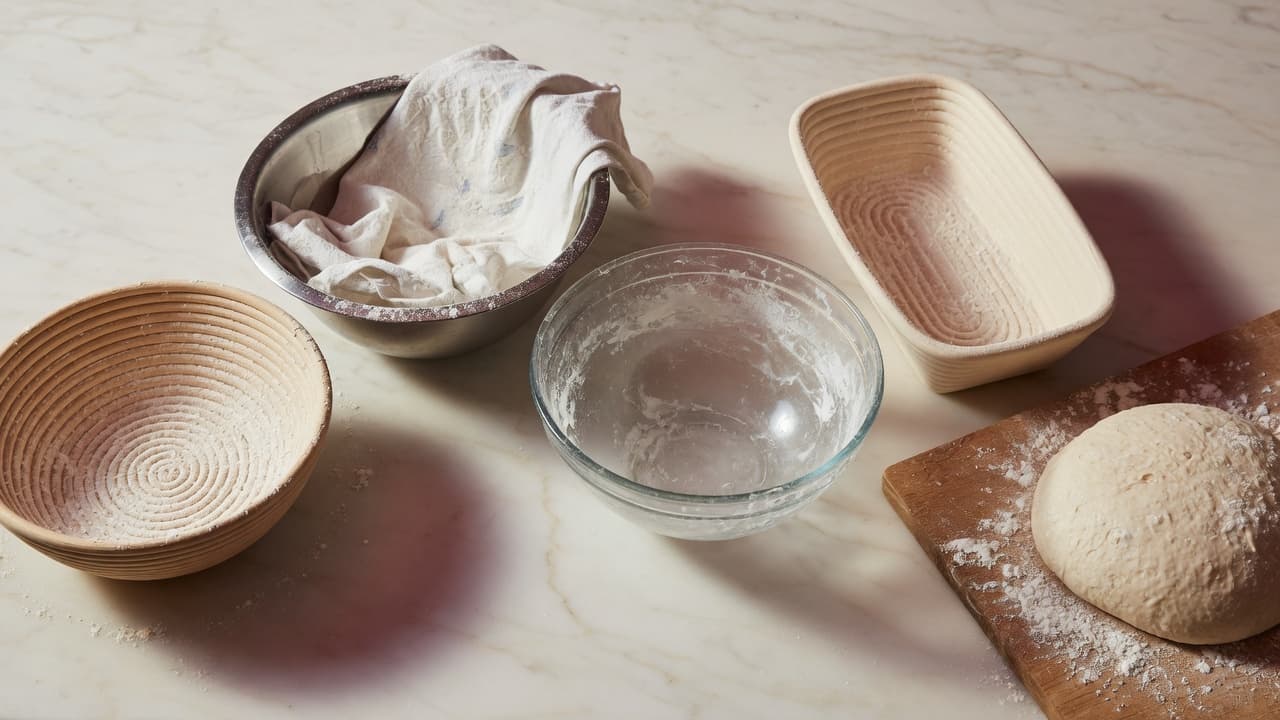
- Can be lined with a heavily floured couche or tea towel for a pseudo-banneton effect.
Side-by-Side Test Results (50 Bakes)
We tested the same 75% hydration country dough in 8-inch rattan bannetons vs 8-inch glass bowls, both lined with rice-flour-dusted linen. Same cold proof (14 hrs @ 38°F). Same bake (475°F covered 20 min, 450°F uncovered 22 min).
Shape Retention
Banneton loaves held a clean 4.5-inch diameter. Bowl loaves spread to 5.2–5.5 inches — a 15–20% wider, flatter loaf. The difference is visible before scoring.
Crumb Structure
Banneton: even, open, consistent alveoli from center to edge. Bowl: slightly tighter crumb at the edges where the dough spread and compressed itself. Not dramatic, but measurable on image analysis.
Scoring & Release
Banneton: skin forms reliably, scores open cleanly, loaf drops out with a tap. Bowl: skin is patchy (condensation drips back), scores drag, stuck dough needs coaxing. We lost 2/25 bowl loaves to tearing.
Crust Quality
Banneton crusts were thinner, crispier, with better color separation (ear vs body). Bowl crusts were thicker and more uniform — fine for sandwich bread, less ideal for artisan presentation.
When You Can Skip the Banneton
- Hydration ≤ 70% — dough has enough structure to stand on its own.
- Round boules only — batards and ovals need the banneton's lengthwise support.
- Budget or space constraints — a $0 bowl beats no proofing vessel.
- First 5–10 bakes — learn fermentation first; equipment second.
When the Banneton Pays Off
- Hydration ≥ 75% — dough will spread without lateral support.
- High-volume baking — consistent shape = consistent bake times = predictable schedule.
- Selling at market — customers expect the spiral; it signals craft.
- Batards, ovals, or shaped loaves — bowls can't do non-round shapes.
- Long cold proofs (18+ hrs) — more time to spread means more need for structure.
The Compromise: Bowl + Couche
Line a bowl with a well-floured linen couche (or clean tea towel). It mimics the banneton's wicking and release for ~$5. Not as rigid for shape, but 80% of the benefit at 20% of the cost. We use this for test bakes and low-hydration doughs.
Care & Longevity
- Rattan banneton: brush out flour after each use. Never wash with soap. Air-dry completely. Lasts 3–5 years of weekly use.
- Wood-pulp banneton: lighter, cheaper, but absorbs more moisture — dry thoroughly to prevent mold. Lasts 1–2 years.
- Plastic banneton (Brotform): dishwasher safe, zero maintenance, but no wicking. We don't recommend for artisan sourdough.
- Bowl: wash normally. Zero maintenance.
Our Verdict
Buy an 8-inch rattan banneton ($18–25) if you're baking 75%+ hydration sourdough weekly. It's the single highest-ROI tool after a scale and Dutch oven. For everything else, a floured bowl + couche works. Don't let equipment gatekeep your baking — but don't pretend the bowl is equal when the hydration climbs.
Frequently Asked Questions
Do I really need a banneton for sourdough?
Yes — above ~75% hydration. A banneton holds shape, wicks moisture from the dough surface for cleaner scoring, and releases reliably. Below 70% hydration a floured bowl works fine. In 50 side-by-side bakes the banneton produced a 15–20% taller loaf and zero tears; the bowl tore 2 of 25 loaves on release.
Can I just use a bowl instead of a banneton?
Yes. Line a glass or stainless bowl with a heavily floured linen couche or clean tea towel. You lose the rigid shape and rattan wicking, but you keep ~80% of the benefit at ~$5 instead of $18–25. Use rice flour, not wheat — it doesn't absorb moisture, so the dough releases cleanly.
Why use a banneton instead of a bowl?
Four things a bowl can't do: the rigid coils hold the dough vertical instead of letting it spread, the rattan wicks a thin layer of moisture off the surface so it scores cleanly, the gaps let air reach the dough instead of trapping condensation against it, and the shape repeats bake after bake. A bowl only contains the dough. At 65–70% hydration that's enough; at 75%+ it isn't.
Do you bulk ferment in a bowl or banneton?
Bulk ferment in a bowl, always — a banneton is for the final proof only. During bulk you want the dough loose and warm in a straight-sided container so you can judge the rise and do stretch-and-folds; a banneton has no lid, dries the surface, and its shape tells you nothing about volume. Shape the dough after bulk, then move it to the banneton for the final cold proof. Proofing in a banneton for the full bulk is the single most common misuse we see.
What size banneton do I need for a 500g loaf?
An 8–9 inch (20–23 cm) round banneton holds 500–750g of dough. For 1 kg loaves use a 10-inch round or a 10×5 inch oval. Buy slightly larger than you think — a too-small banneton overproofs the surface.
Is the spiral pattern on a banneton necessary?
No — it's cosmetic. The spiral comes from the coiled rattan and signals craft at farmers markets, but it doesn't affect crumb, crust, or oven spring. A smooth-sided banneton or a couche-lined bowl produces the same loaf without the rings.
How do I season a new banneton?
Spritz lightly with water, dust generously with rice flour, work the flour into the coils with your fingers, and let it dry overnight. Do this for the first 3 bakes. After that the basket is seasoned — just dust with rice flour before each proof. Never wash with soap.
How much does a banneton cost?
Rattan bannetons run $15–30 for an 8–9 inch round. Wood-pulp ones are $8–15 but last 1–2 years. Plastic Brotforms are $10–20, dishwasher-safe, but don't wick moisture. For a one-bake test, a $5 bowl + linen couche is the cheapest entry point.
Pair this with our beginner sourdough boule recipe and sourdough scoring guide for the complete proof-to-bake workflow.
Definitive guide PDF + banneton marketplace
Download the full five-vessel comparison (hydration tables, photos, decision chart) or browse live rattan and proofing-basket listings.
Home Baker Profit Kit
Setup path (permits, zoning, pricing), 50-state master reference, and county lookbooks.
Get the Profit KitCrosodo Blog entries are recipe and craft notes from working cottage bakers. Recipes assume working with an active starter and basic equipment. Cottage food sales are governed by your state's law — see the free state directory or Can I sell this?.