
Hawaii Cottage Food Law PDF 2026 — Full Legal Text + Annotations
Full statute text, allowed foods, registration, sales cap None, and all 5 Hawaii counties with zoning + health department links. 27-page PDF with official sources. Free preview below — buy the complete guide for $44.
This page shows the first 2 pages + statute excerpt. One-time $44 · Yours to keep · Stripe checkout · Guide (PDF) emailed with receipt.
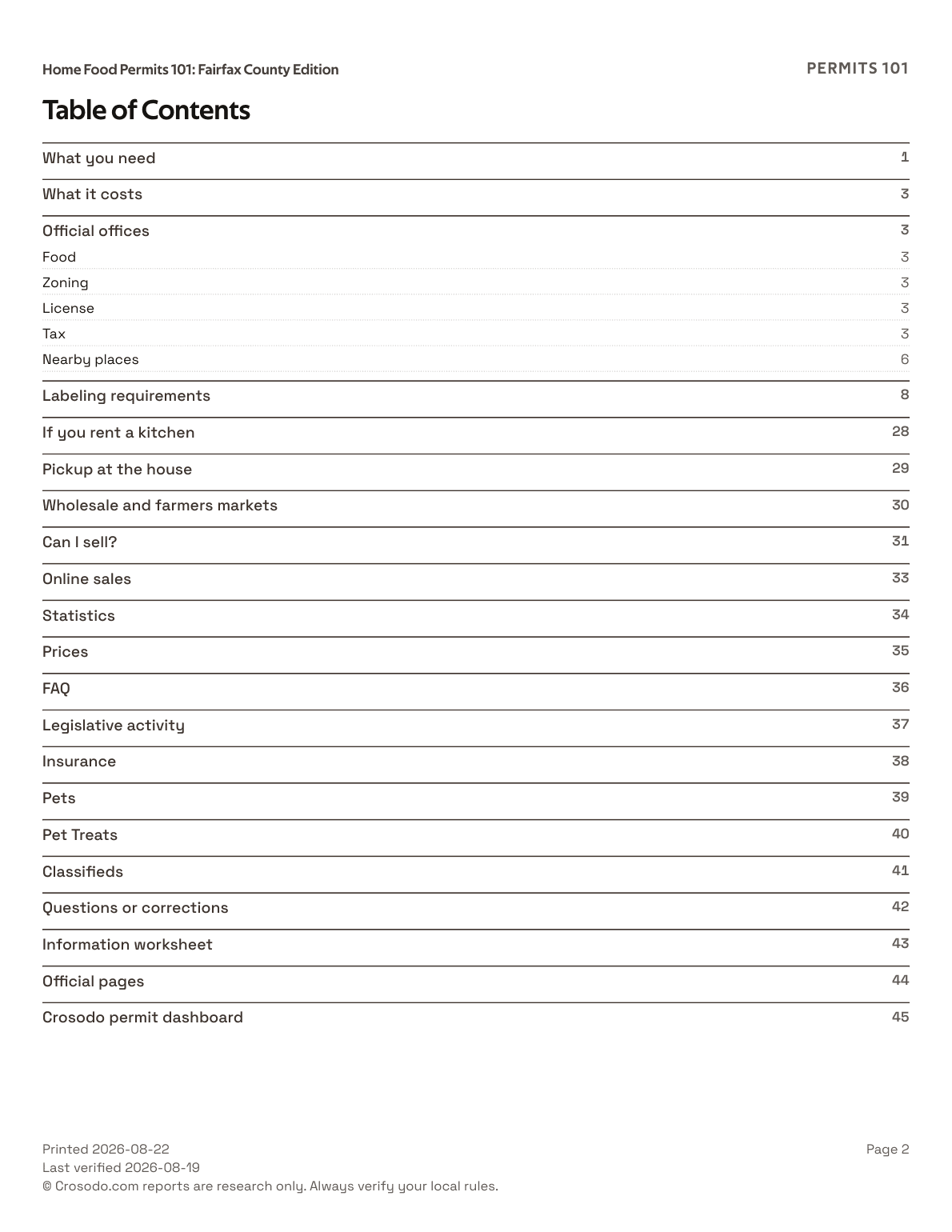
- Full Hawaii statute text with key provisions and official citation
- Allowed and prohibited foods, labeling rules, sales cap (None)
- Registration and permit steps with direct state-agency links
- All 5 Hawaii counties with zoning + health department links
- 27-page guide with every official source URL, licensed to your address
What exactly am I buying?
The complete Hawaii License & Permit Guide — not the free 2-page preview above.
How do I receive it?
Stripe checkout. We email a cover letter, paid receipt, and the guide (PDF) licensed to your address.
Is it current?
Every report lists its official sources so you can verify against the current statute. See also the research-verified Hawaii guide.
Not ready? Get free Hawaii cottage-food updates instead.
Hawaii Administrative Rules Title 11, Chapter 50 (Food Safety Code), §11-50-3 (Permits, special events, homemade food products and hand-pounded poi, and exemptions)
Verbatim ExcerptHOMEMADE FOOD OPERATIONS Under HAR 11-50-3, Homemade Food (HMF) sales are allowed and exempt from the requirement of a food establishment permit. HMF operations can only make food that is not potentially hazardous. Operators can use their home kitchen to produce products to sell directly to consumers. HMF sales by internet, mail order, consignment or at wholesale are not allowed. FOODS NOT ALLOWED AS HOMEMADE FOOD PRODUCT: Foods not allowed include fermented foods, acidified foods, canned or bottled foods, dried meats or seafood, low acid canned foods, and garlic in oil. Examples of these foods include: kimchee, pickles, beef jerky, and the like. APPROVED HOMEMADE FOOD PRODUCTS & LABELING: As an HMF operator, you are allowed to produce food items which are considered not potentially hazardous. The following products can be made from your home kitchen: Breads, rolls, mochi; Cakes, cookies, and pastries; Candies and confections; Jams, jellies, and preserves; Cereals, trail mixes, and granola; Popcorn. All HMF products require specific labeling with the following information: 1. A statement that reads 'Made in a home kitchen not routinely inspected by the Department of Health'. 2. Common name of the product or descriptive name. 3. Ingredient list if made from 2+ ingredients, listed in descending order of predominance by weight. 4. Name and contact information of the homemade food product operator.
Source: health.hawaii.gov/san/files/2019/09/HMF-HANDOUT.pdf →
Hawaii allows non-potentially hazardous (non-PHF) foods only, including breads, rolls, mochi, cakes, cookies, pastries, candies, confections, jams, jellies, preserves, cereals, trail mixes, granola, and popcorn. Most shelf-stable baked goods and confections qualify.
Prohibited items include fermented foods, acidified foods, canned or bottled foods (except jams/jellies), dried meats or seafood, low-acid canned foods, garlic in oil, pickles, kimchee, beef jerky, and all items requiring refrigeration. Perishable baked goods with dairy fillings (cheesecakes, cream puffs, custard pies) are also prohibited.
Labels must include the statement 'Made in a home kitchen not routinely inspected by the Department of Health,' the common product name, an ingredient list in descending order by weight (for multi-ingredient products), and the operator's name and contact information (address, email, or phone; PO boxes are allowed).
None
Poor (IJ Grade F)
5
Hawaii Counties (5)
Cottage food registration usually happens at the county level. Click any county for local zoning, health department, and planning department links.
Where to verify Hawaii's rules
Data compiled from primary sources. Cottage food laws change — verify with your state agency before relying on this information.
Cottage food laws are amended every year. This is a starting reference, not legal advice. Verify with Hawaii Department of Healthand your local health department before relying on this data.