Iowa Cottage Food Law PDF 2026 — Full Legal Text + Annotations
Full statute text, allowed foods, registration, sales cap None, and all 99 Iowa counties with zoning + health department links. 310-page PDF with official sources. Free preview below — buy the complete guide for $44.
This page shows the first 2 pages + statute excerpt. One-time $44 · Yours to keep · Stripe checkout · Guide (PDF) emailed with receipt.
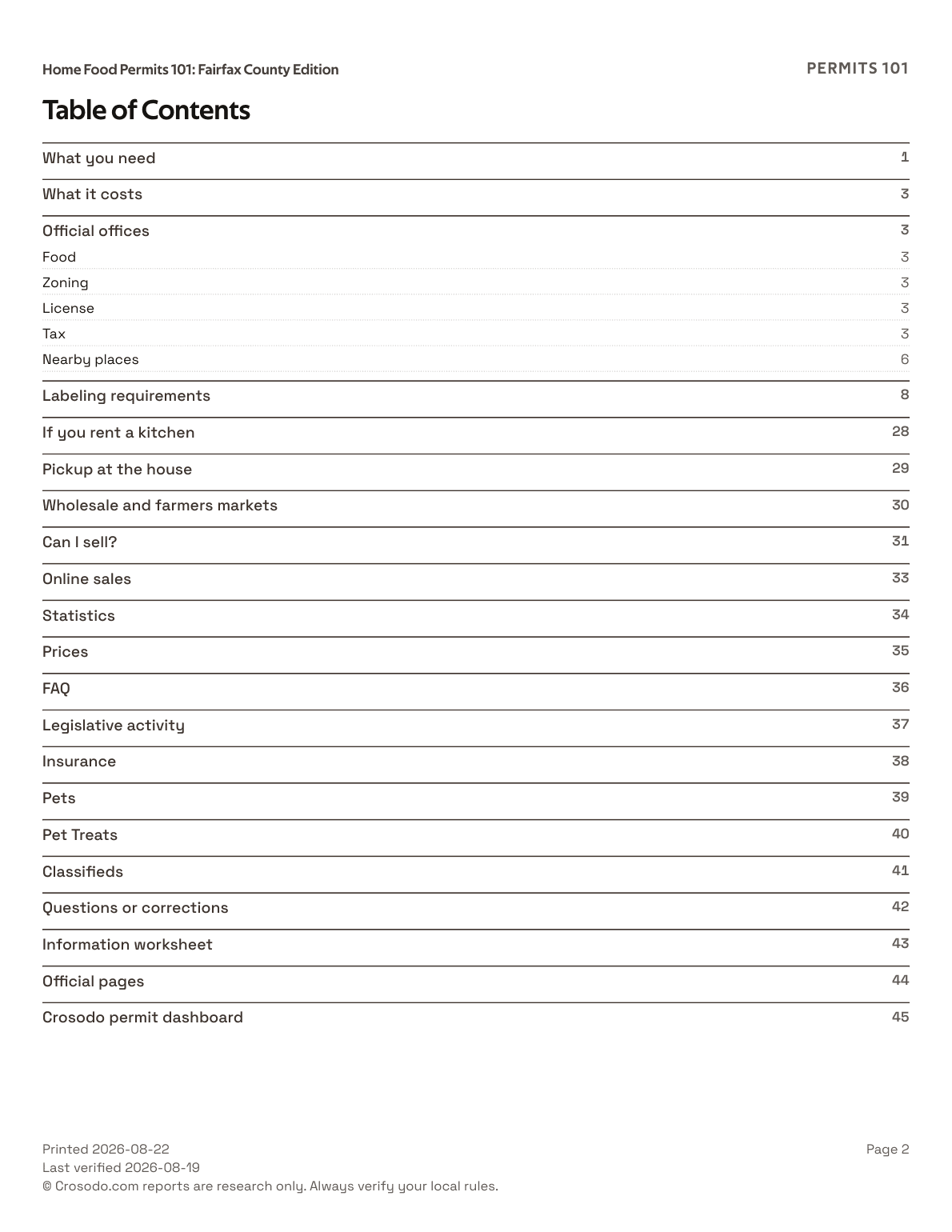
- Full Iowa statute text with key provisions and official citation
- Allowed and prohibited foods, labeling rules, sales cap (None)
- Registration and permit steps with direct state-agency links
- All 99 Iowa counties with zoning + health department links
- 310-page guide with every official source URL, licensed to your address
What exactly am I buying?
The complete Iowa License & Permit Guide — not the free 2-page preview above.
How do I receive it?
Stripe checkout. We email a cover letter, paid receipt, and the guide (PDF) licensed to your address.
Is it current?
Every report lists its official sources so you can verify against the current statute. See also the research-verified Iowa guide.
Not ready? Get free Iowa cottage-food updates instead.
Iowa Code Chapter 137F — Food Establishments and Food Processing Plants, Section 137F.20 — Cottage Food Requirements
Verbatim Excerpt137F.20 Cottage food — requirements. 1. Cottage food is exempt from all licensing, permitting, inspection, packaging, and labeling laws of the state if the food is sold and delivered by the producer directly to the consumer, or delivered by mail or an agent of the producer such as an employee. A producer may sell food to the consumer in person, remotely, by telephone, by internet, or by an agent of the producer. 2. Cottage food sold pursuant to this section shall be affixed or labeled with all of the following information: a. Information to identify the name and address, phone number, or electronic mail address of the person preparing the food. b. The common name of the food. c. The ingredients of the cottage food in descending order of predominance. d. The following statement: "This product was produced at a residential property that is exempt from state licensing and inspection." If the cottage food contains one or more major food allergens, an additional allergen statement must be included on the label identifying each major allergen contained in the food by the common name of the allergen. 137F.1 Definitions (excerpt): "Cottage food" means the production and sale of food produced at a private residence other than time/temperature control for safety food as provided in section 137F.20 and food for resale that is not time/temperature control for safety food. "Cottage food" includes home-processed and home-canned pickles, vegetables, or fruits that have a finished equilibrium pH value of four and six-tenths or lower or a water activity value of eighty-five hundredths or less for which each batch has been measured by a pH meter or a water activity meter and each container that is sold or offered for sale contains the date the food was processed and canned.
Source: legis.iowa.gov/docs/code/137F.pdf →
Producers may sell virtually all non-TCS (non-time/temperature control for safety) foods, including baked goods, candies, condiments, dried goods, pastries, preserves, snacks, and many beverages. Acidified foods (pickles, salsas) are allowed if each batch is tested with a pH meter (pH ≤4.6) or water activity meter (aw ≤0.85) and the production date is on the label.
Perishable baked goods (requiring refrigeration), low-acid canned foods (not pH-tested), juices, and meat jerkies are prohibited under the cottage food exemption. TCS foods may be sold through the separate Home Food Processing Establishment license pathway.
Labels must include: name and address (or phone or email) of the producer, common name of the food, ingredients in descending order of predominance, and the statement 'This product was produced at a residential property that is exempt from state licensing and inspection.' Major allergens must also be identified on the label.
None
Good (IJ Grade B)
99
Iowa Counties (99)
Cottage food registration usually happens at the county level. Click any county for local zoning, health department, and planning department links.
Where to verify Iowa's rules
Data compiled from primary sources. Cottage food laws change — verify with your state agency before relying on this information.
Cottage food laws are amended every year. This is a starting reference, not legal advice. Verify with Iowa Department of Inspections and Appealsand your local health department before relying on this data.