Vermont Cottage Food Law PDF 2026 — Full Legal Text + Annotations
Full statute text, allowed foods, registration, sales cap 30000, and all 14 Vermont counties with zoning + health department links. 53-page PDF with official sources. Free preview below — buy the complete guide for $44.
This page shows the first 2 pages + statute excerpt. One-time $44 · Yours to keep · Stripe checkout · Guide (PDF) emailed with receipt.
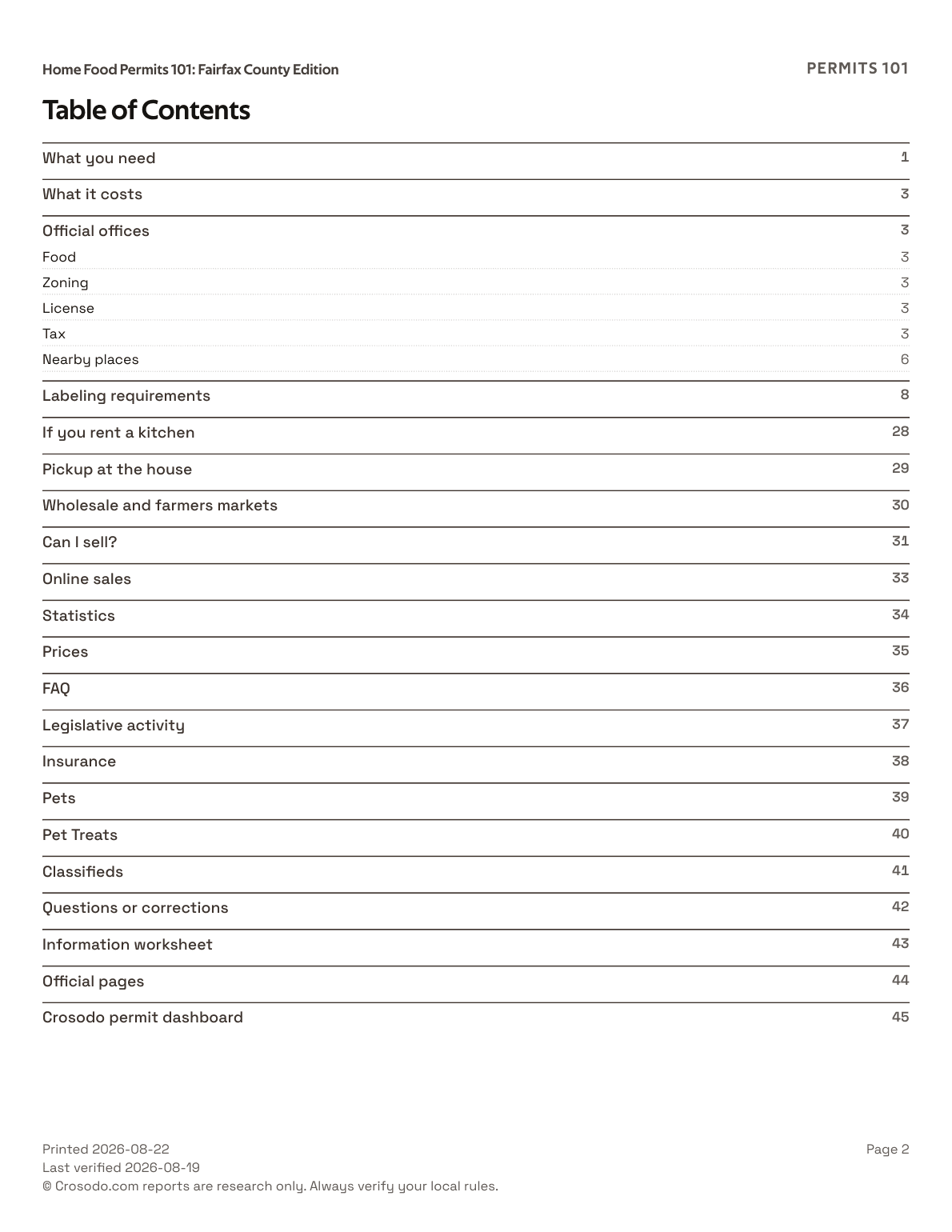
- Full Vermont statute text with key provisions and official citation
- Allowed and prohibited foods, labeling rules, sales cap (30000)
- Registration and permit steps with direct state-agency links
- All 14 Vermont counties with zoning + health department links
- 53-page guide with every official source URL, licensed to your address
What exactly am I buying?
The complete Vermont License & Permit Guide — not the free 2-page preview above.
How do I receive it?
Stripe checkout. We email a cover letter, paid receipt, and the guide (PDF) licensed to your address.
Is it current?
Every report lists its official sources so you can verify against the current statute. See also the research-verified Vermont guide.
Not ready? Get free Vermont cottage-food updates instead.
Vermont Statutes Annotated, Title 18 Health, Chapter 085 Food and Lodging Establishments, §4351 License from Department of Health; Cottage Food Operator Exemption under Act 42 (2025)
Verbatim Excerpt§ 4351. License from Department of Health (a) A person shall not operate or maintain a food manufacturing facility, retail food establishment, lodging establishment, children's camp, seafood vending facility, or any other place in which food is prepared and served, unless he or she obtains and holds from the Commissioner a license authorizing such operation. [Act 42 (2025) provides a licensing exemption for cottage food operators that: have gross annual receipts of $30,000.00 or less from the sale of cottage food products; produce or package cottage food products solely in the home kitchen of the cottage food operator's private residential dwelling or in a kitchen on their personal property. Cottage food products are defined in rule as food sold by a cottage food operator that does not require refrigeration or time or temperature control for safety. Cottage foods include, but are not limited to: non-potentially hazardous baked goods, candy, jams and jellies, dry herbs, trail mix, granola, cereal, mixed nuts, flavored vinegar, popcorn, coffee beans, dry tea, home-canned pickles, vegetables, or fruits with an equilibrium pH value of 4.6 or lower or a water activity value of 0.85 or less that are made using recipes approved by the National Center for Home Food Preservation or reviewed by a food processing authority for safety. Food made under a license exemption cannot be sold to restaurants or other licensed food establishments.]
Source: healthvermont.gov/environment/food-lodging-program/home-based-food-licenses-and-exemptions →
Cottage food operators (under Act 42, 2025 exemption) may sell non-potentially-hazardous baked goods, candy, jams, jellies, dry herbs, trail mix, granola, cereal, mixed nuts, flavored vinegar, popcorn, coffee beans, dry tea, and home-canned pickles/vegetables/fruits with equilibrium pH 4.6 or lower (using NCHFP-approved recipes), as long as gross annual receipts do not exceed $30,000. A separate Home Bakery License is available for larger operations under $10,000 in production.
TCS (time/temperature control for safety) foods are prohibited under the cottage food exemption, including refrigerated baked goods (quiche, cheesecake), meats, poultry, fish, dairy, cooked plant-based foods, and other foods requiring temperature control. Cottage food products cannot be sold to restaurants or other licensed food establishments.
Labels must include: name and address of producer, name of food product, ingredients in descending order, net weight/volume, allergen information per federal requirements, and the statement 'Made in a home kitchen not inspected by the Vermont Department of Health' in at least 10-point font in a contrasting color. Nutritional labels required only if nutrient content or health claims are made.
30000
Okay (IJ Grade B/D+)
14
Vermont Counties (14)
Cottage food registration usually happens at the county level. Click any county for local zoning, health department, and planning department links.
Where to verify Vermont's rules
Data compiled from primary sources. Cottage food laws change — verify with your state agency before relying on this information.
Cottage food laws are amended every year. This is a starting reference, not legal advice. Verify with Vermont Agency of Agriculture, Food and Marketsand your local health department before relying on this data.