
Cottage Food Producer Registration Training (Tier 1)
Required for Minnesota cottage food producers with gross annual food sales of $7,665 or less. This page reproduces the Check Your Understanding questions and answers from the official MDA training so you can study before registering.
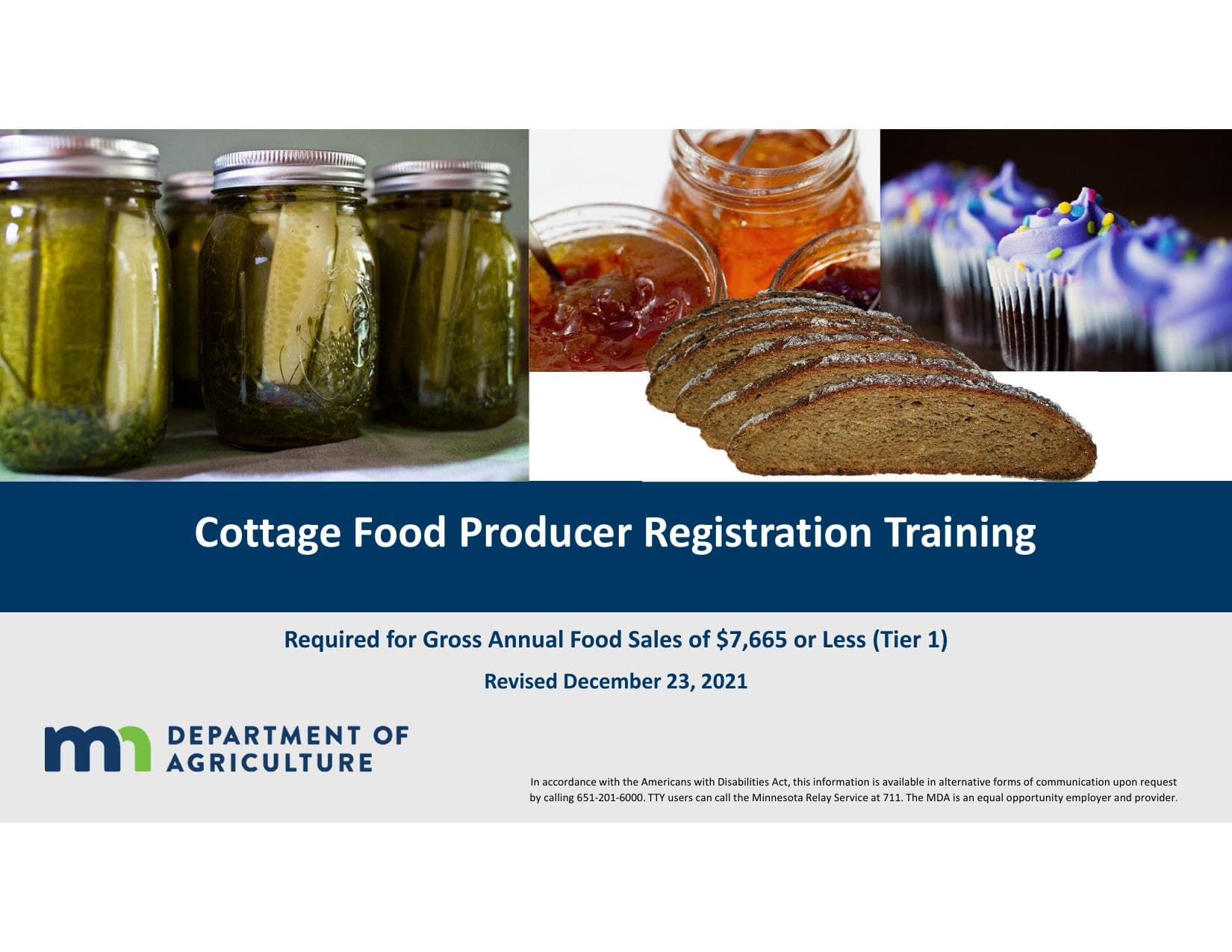
Study this training before you register
The Minnesota Department of Agriculture requires cottage food producers in Tier 1 (up to $7,665 in gross annual sales) to complete this training and pass the exam before registering. The PDF covers allowed foods, sales channels, safe handling, labeling, registration steps, and — importantly for bakers expanding into pet products — home-processed pet treats for dogs and cats.
Source: Minnesota Department of Agriculture · Revised December 23, 2021
Open official MDA training PDFAgency guidance changes without notice. Always confirm current rules on mda.state.mn.us before relying on this material.
Home-processed pet treats in Minnesota
Minnesota's cottage food exemption covers home-processed pet treats under Minn. Stat. § 25.391 — separate from human cottage foods under § 28A.152. Only dog and cat treats qualify; treats must be baked or dehydrated, human-safe, and free of prohibited ingredients.
You can make & sell
- Baked or dehydrated dog and cat treats (e.g., oatmeal peanut butter biscuits)
- Treats must be considered "human safe" and appropriate for the intended pet species
You cannot make & sell
- Pet treats containing hemp, hemp extract, or CBD
- Pet treats of animal origin (frozen liver, raw venison, dehydrated turkey jerky, etc.)
- Ingredients toxic to dogs or cats — chocolate, xylitol, hops, macadamia nuts, onions, garlic, grapes, and raisins
Pet treat labeling
- Producer name
- Producer address or cottage food registration number
- Date the pet treat was prepared
- Ingredients list
- Statement: "These products are homemade and not subject to state inspection"
- Major allergens are not required on pet treat labels (unlike human cottage foods)
Questions about a specific ingredient? Contact the MDA Pet Food Unit at 651-201-6221. For other states, see our pet treat guidance hub.
Training quiz — questions & answers
These 20 items are extracted from the Check Your Understanding sections throughout the official MDA training. Use them to review before taking the registration exam.
- A. Groups of persons
- B. Licensed retail food handlers
- C. An individual
- D. All of the above
To qualify as a cottage food producer, you must be an individual. You can organize your business as an entity recognized in state law.
- A. pH of 4.1 and water activity of 0.90
- B. pH of 4.6 and water activity of 0.85
- C. pH of 5.0 and water activity of 0.80
- D. None of these are correct
The highest pH value allowed for canned products under this exemption is 4.6 and the highest water activity allowed is 0.85.
- A. Roasted walnuts
- B. Pickled green beans
- C. Chocolate chip cookies
- D. All of the above
Roasted walnuts, pickled green beans, and chocolate chip cookies can all be made and sold under the cottage food exemption.
Cannabidiol (CBD) is not an approved ingredient for use in food products, including products produced under the cottage food exemption.
- A. Cakes topped with cut fresh fruit garnish
- B. Cheesecake
- C. Charcuterie boards
- D. Canned, pickled cucumbers
Fresh cut fruits, cheesecake, and charcuterie are considered potentially hazardous foods and may not be prepared and sold under the cottage food exemption.
- A. Cats
- B. Birds, fish, and reptiles
- C. Dogs
- D. Both A and C
Home-processed pet treats can only be made for dogs and cats under the exemption for cottage food producers.
- A. Frozen beef liver
- B. Raw ground venison
- C. Dehydrated turkey jerky
- D. Oatmeal peanut butter biscuit
Frozen beef liver, raw ground venison, and dehydrated turkey jerky are from animal origin and may not be sold under the cottage food exemption.
Hemp, hemp extract, and CBD are not approved ingredients for use in pet treats.
Cottage foods and pet treats cannot be shipped in the mail or through a delivery service. They must be provided in-person to the consumer.
- A. In a grocery store
- B. Directly from your home, online, farmers' markets, and community events
- C. Through the mail
- D. At a restaurant
Cottage food products may be sold directly from homes, online, farmers' markets, and community events.
Foodborne illness results from eating food or beverages containing harmful pathogens or other contaminants.
- A. Sick food workers
- B. Using contaminated equipment
- C. Touching food with dirty hands
- D. All of the above
Sick food workers, using contaminated equipment, and touching food with dirty hands are among the most common practices that cause foodborne illness.
- A. Wash your hands often
- B. Wear gloves
- C. Use a hair net
- D. Wear an apron
Good handwashing removes pathogens and is the most important step you can take to prevent the spread of foodborne illness.
- A. Under the handwashing station
- B. Directly on the grass or ground under the table
- C. Off the ground in clean, dry containers
- D. Wherever there is space available
Cottage food products must be protected from contamination during preparation, storage, and sale.
Food contact surfaces need to be washed, rinsed, and sanitized before starting food preparation, and whenever they become dirty during preparation.
Cottage food labels must include all of these elements before products are offered for sale.
Major food allergens are not required to be listed on pet treat labels.
- A. Producer name
- B. Producer address or registration number
- C. Ingredients and date prepared
- D. The statement "These products are homemade and not subject to state inspection"
All pet treat packages must include the producer name, address or registration number, date prepared, ingredients, and the homemade/not-inspected statement.
Registration and training for Tier 1 cottage food producers is required yearly.
- A. Food and retail businesses
- B. Food and safety inspectors
- C. Neighborhood groups and city councils
- D. Local units of government such as city, county, or township licensing and zoning agencies
Local city, county, or township licensing and zoning agencies may have business licensing requirements or ordinances you must follow in addition to the cottage food exemption.
Ready to register? Complete the official training, then apply through the MDA Online Licensing and Payment System.