Idaho Cottage Food Law PDF 2026 — Full Legal Text + Annotations
Full statute text, allowed foods, registration, sales cap None, and all 44 Idaho counties with zoning + health department links. 146-page PDF with official sources. Free preview below — buy the complete guide for $44.
This page shows the first 2 pages + statute excerpt. One-time $44 · Yours to keep · Stripe checkout · Guide (PDF) emailed with receipt.
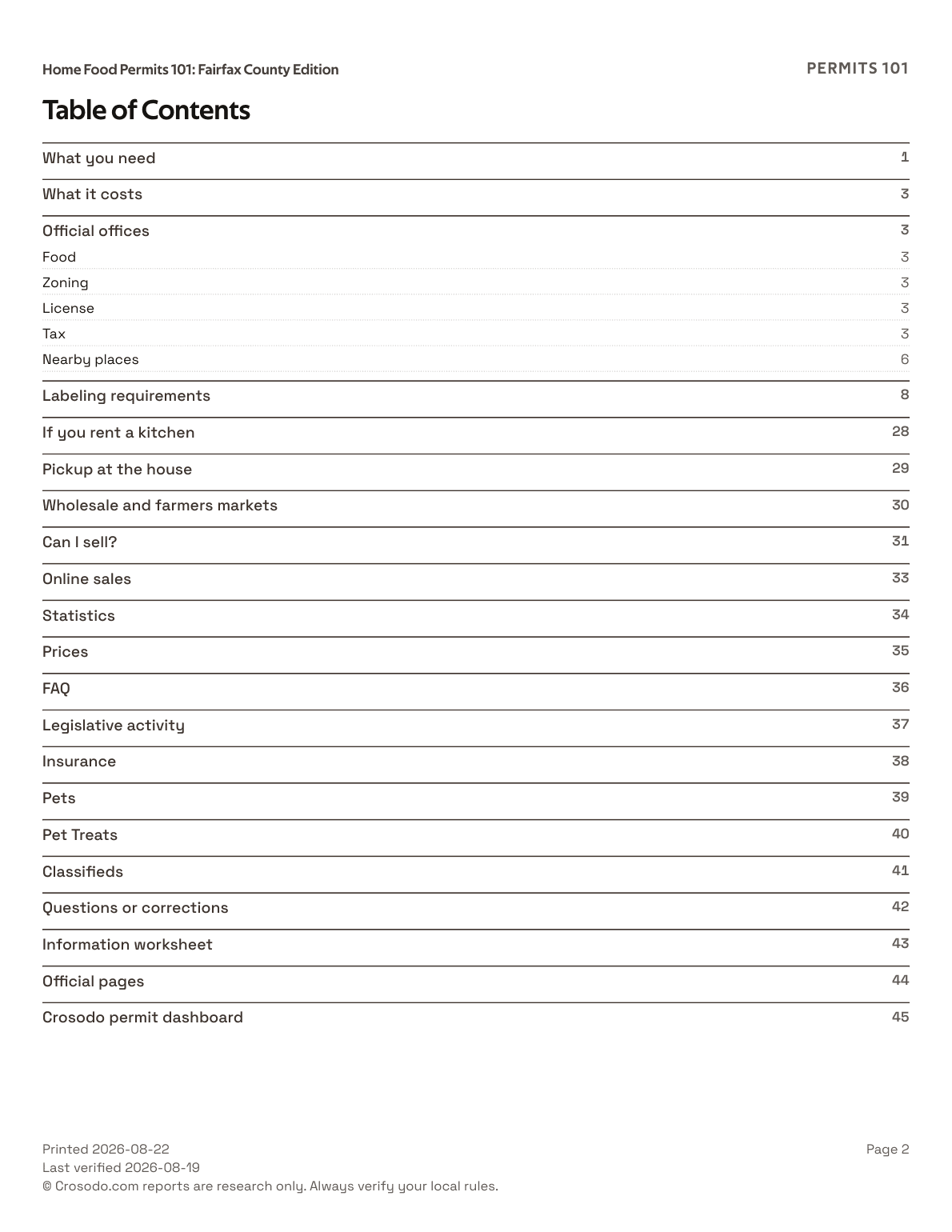
- Full Idaho statute text with key provisions and official citation
- Allowed and prohibited foods, labeling rules, sales cap (None)
- Registration and permit steps with direct state-agency links
- All 44 Idaho counties with zoning + health department links
- 146-page guide with every official source URL, licensed to your address
What exactly am I buying?
The complete Idaho License & Permit Guide — not the free 2-page preview above.
How do I receive it?
Stripe checkout. We email a cover letter, paid receipt, and the guide (PDF) licensed to your address.
Is it current?
Every report lists its official sources so you can verify against the current statute. See also the research-verified Idaho guide.
Not ready? Get free Idaho cottage-food updates instead.
Idaho Administrative Procedure Act Rule 16.02.19 (Idaho Food Code), cottage food exemption provisions; see also Idaho Code Title 22, Chapter 13 (Idaho Food Freedom Act, proposed 2012 but not enacted as separate statute)
Verbatim ExcerptSTARTING A HOMEMADE FOOD OPERATION [from Eastern Idaho Public Health guidance implementing IDAPA 16.02.19]: Idaho has allowed for the sale of low-risk homemade foods for years through administrative practice. The Idaho Department of Health and Welfare has established that non-potentially hazardous foods may be sold directly to consumers without a food establishment license. Except for acidified foods, any non-potentially hazardous food is allowed. Some types of items, like fruit butters, apple sauce, and pepper jams, may be allowed depending on the recipe — contact your health district to get approval for products you are unsure about. Limitations confirmed: Direct sales only; interstate sales prohibited; perishable foods prohibited; no commercial kitchen use. Labeling: Foods that you produce in your home need to be clearly labeled on the product packaging; or by a clearly visible placard at the sales/service location that also states: 'The food was prepared in a home kitchen that is not subject to regulation and inspection by the regulatory authority; and the food may contain allergens.' Sales limit: unlimited (no sales cap).
Source: forrager.com/law/idaho/ →
Idaho allows all non-potentially hazardous foods except acidified foods. This broad category includes baked goods, candies, condiments (honey, mustards, nut butters, oils, syrups, vinegars), dry goods, pastries, most preserves (including jams and jellies), and snacks. Some borderline items like fruit butters may require health district approval.
Prohibited items include acidified foods (pickles, salsas), all TCS foods requiring refrigeration, perishable baked goods, and any foods sold at wholesale, to restaurants, or to retail stores. Interstate sales are also prohibited.
Products must be labeled with the statement 'The food was prepared in a home kitchen that is not subject to regulation and inspection by the regulatory authority; and the food may contain allergens.' A placard at the point of sale is an acceptable alternative to labeling individual packages.
None
Great (IJ Grade A-)
44
Idaho Counties (44)
Cottage food registration usually happens at the county level. Click any county for local zoning, health department, and planning department links.
Where to verify Idaho's rules
Data compiled from primary sources. Cottage food laws change — verify with your state agency before relying on this information.
Cottage food laws are amended every year. This is a starting reference, not legal advice. Verify with Idaho Department of Health and Welfareand your local health department before relying on this data.