New Mexico Cottage Food Law PDF 2026 — Full Legal Text + Annotations
Full statute text, allowed foods, registration, sales cap None, and all 33 New Mexico counties with zoning + health department links. 85-page PDF with official sources. Free preview below — buy the complete guide for $44.
This page shows the first 2 pages + statute excerpt. One-time $44 · Yours to keep · Stripe checkout · Guide (PDF) emailed with receipt.
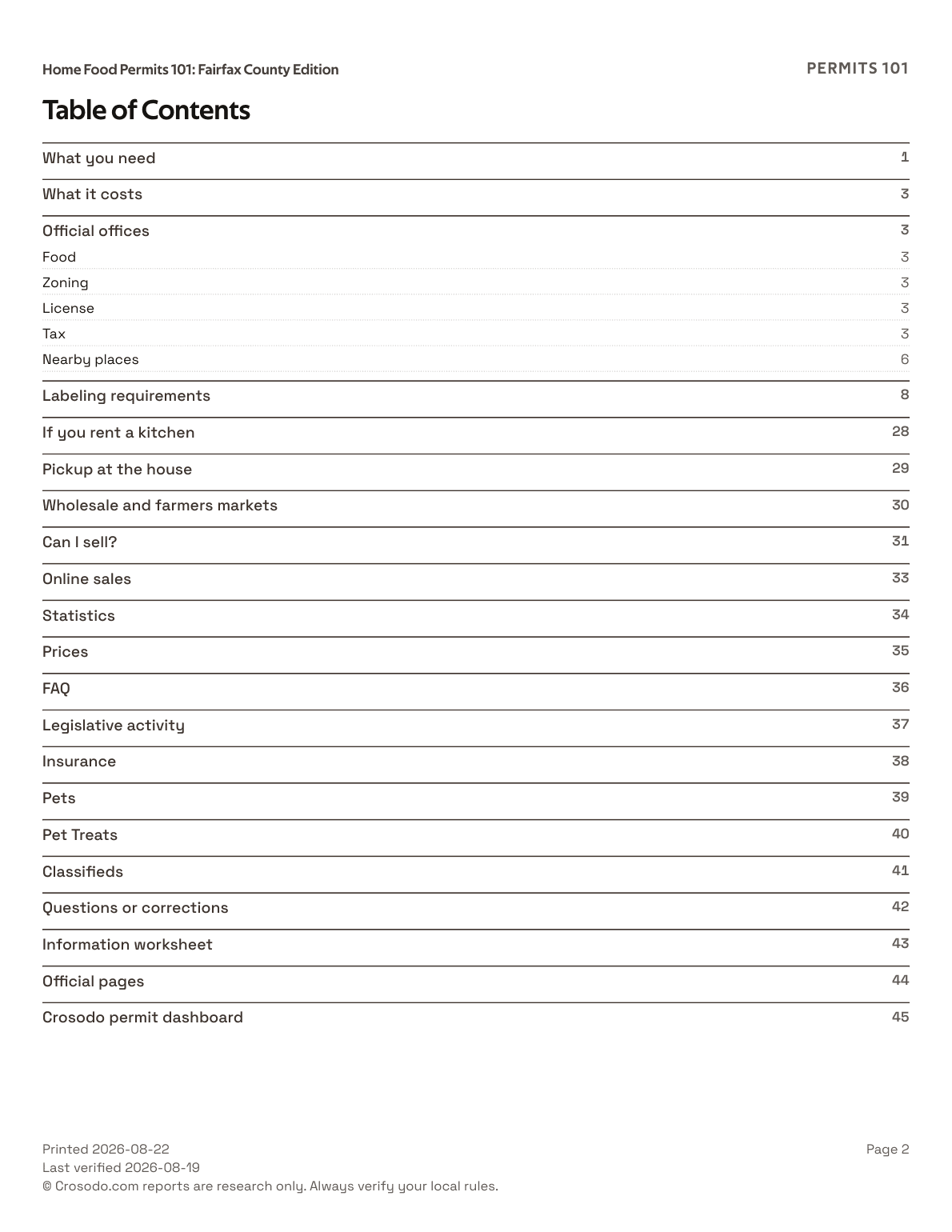
- Full New Mexico statute text with key provisions and official citation
- Allowed and prohibited foods, labeling rules, sales cap (None)
- Registration and permit steps with direct state-agency links
- All 33 New Mexico counties with zoning + health department links
- 85-page guide with every official source URL, licensed to your address
What exactly am I buying?
The complete New Mexico License & Permit Guide — not the free 2-page preview above.
How do I receive it?
Stripe checkout. We email a cover letter, paid receipt, and the guide (PDF) licensed to your address.
Is it current?
Every report lists its official sources so you can verify against the current statute. See also the research-verified New Mexico guide.
Not ready? Get free New Mexico cottage-food updates instead.
New Mexico Statutes Annotated 1978, Chapter 25 — Food, Article 12 — Homemade Food, Section 25-12-3 — Homemade Food Items; Licensing, Permitting, Inspection and Labeling Exemptions; Requirements; Investigations
Verbatim ExcerptA. The production and sale of homemade food items shall be regulated pursuant to the provisions of the Homemade Food Act and are exempt from other requirements pursuant to the Food Service Sanitation Act [Chapter 25, Article 1 NMSA 1978] and the New Mexico Food Act [25-2-1 to 25-2-19 and 25-2-20 NMSA 1978]; provided that: (1) the food items are not-time-and-temperature-control food items; (2) the seller sells directly to consumers within the state, including at farmers' markets, at festivals, on the internet, at roadside stands, at the seller's home for pick-up or delivery or through mail delivery; (3) the seller completes a food handler certification course approved by the department; (4) the seller maintains a sanitary kitchen, practices good hygiene, protects the kitchen from rodents and pests and keeps pets and children out of the kitchen while producing food; (5) if the seller transports food items pursuant to the Homemade Food Act, the seller ensures that the food is transported in a sanitary manner and is protected from pets, children and other hazards; and (6) the seller labels or otherwise provides to the consumer the information required by Subsection C of this section. C. A seller shall provide the following information about the seller's homemade food items to the consumer: (1) the name, home address, telephone number and email address of the processor of the food item; (2) the common or usual name of the food item; (3) the ingredients of the food item in descending order of predominance; and (4) the following statement: "This product is home produced and is exempt from state licensing and inspection. This product may contain allergens." E. The department may operate a voluntary permit system for the sale of homemade food items. A seller may apply for such a permit from the department. G. The department shall enforce the Homemade Food Act and may investigate any suspected food-borne illness or stop the sale of any suspected contaminated foods; provided that the department shall first issue a written warning regarding any violation before imposing a fine. Failure to comply with a written warning shall be a misdemeanor, and upon conviction the violator shall be subject to a fine not to exceed one hundred dollars ($100) per violation.
Source: law.justia.com/codes/new-mexico/chapter-25/article-12/section-25-12-3/ →
Non-time-and-temperature-control-for-safety (non-TCS) homemade foods produced in a private farm, ranch, or residence may be sold directly to consumers within New Mexico through any channel including farmers markets, festivals, internet, roadside stands, home pickup/delivery, and mail delivery with no sales cap. A voluntary permit is available from the New Mexico Environment Department.
TCS foods (requiring time/temperature control for safety) may not be produced at home and must be made in an NMED-permitted commercial kitchen. Alcohol-containing foods and alcoholic beverages may not be produced at a private residence. Hemp/CBD-infused foods require a commercial hemp manufacturing facility permit. Homemade items may not be sold to restaurants, wholesalers, distributors, or across state lines.
Sellers must provide to consumers: the name, home address, telephone number, and email address of the processor; the common or usual name of the food item; ingredients in descending order of predominance; and the statement: 'This product is home produced and is exempt from state licensing and inspection. This product may contain allergens.' This information must be on a package label, bulk container label, point-of-sale placard, or webpage depending on sale method. For telephone/custom orders, a label is not required but verbal allergen disclosure is mandatory.
None
Great (IJ Grade B)
33
New Mexico Counties (33)
Cottage food registration usually happens at the county level. Click any county for local zoning, health department, and planning department links.
Where to verify New Mexico's rules
Data compiled from primary sources. Cottage food laws change — verify with your state agency before relying on this information.
Cottage food laws are amended every year. This is a starting reference, not legal advice. Verify with New Mexico Environment Departmentand your local health department before relying on this data.