
New York Cottage Food Law PDF 2026 — Full Legal Text + Annotations
Full statute text, allowed foods, registration, sales cap None, and all 62 New York counties with zoning + health department links. 160-page PDF with official sources. Free preview below — buy the complete guide for $44.
This page shows the first 2 pages + statute excerpt. One-time $44 · Yours to keep · Stripe checkout · Guide (PDF) emailed with receipt.
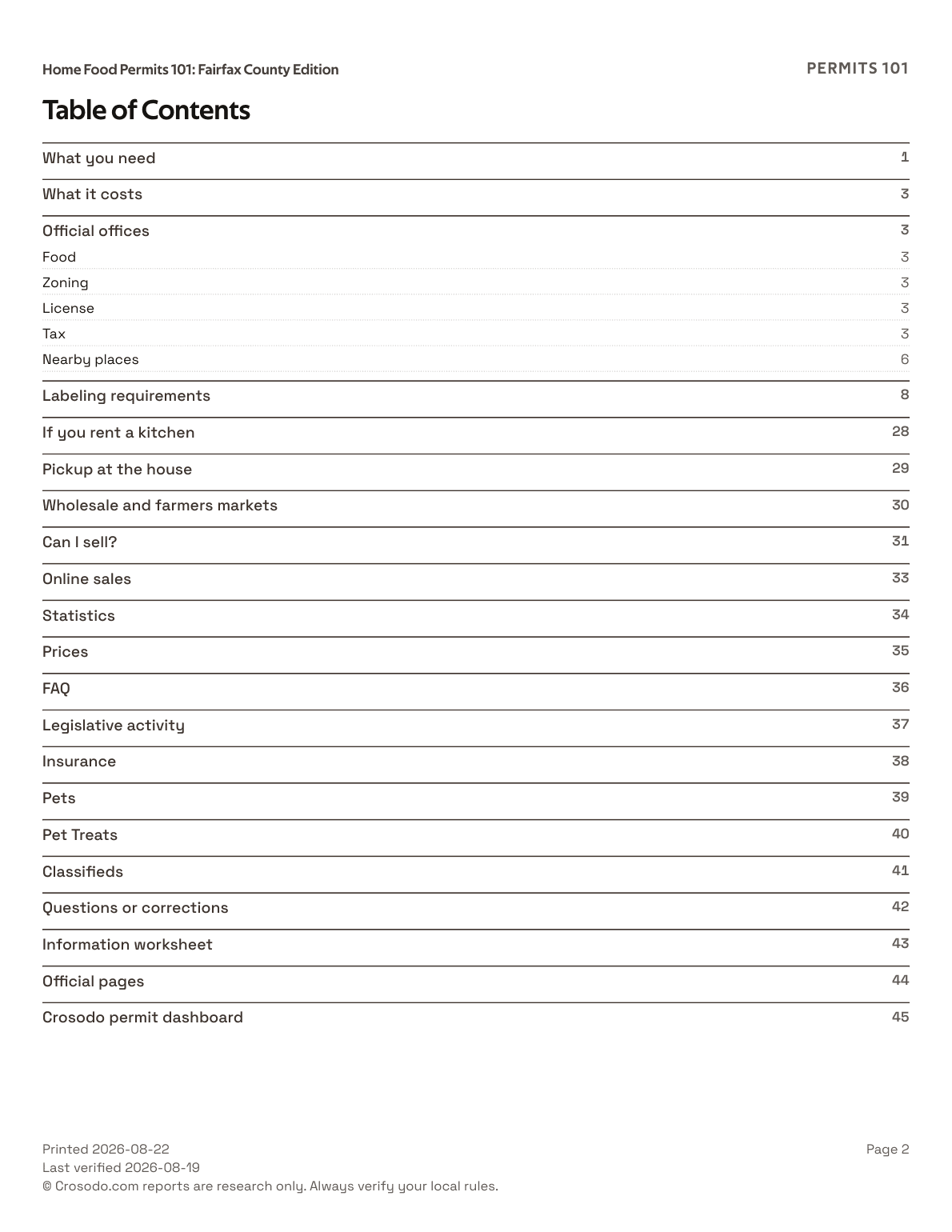
- Full New York statute text with key provisions and official citation
- Allowed and prohibited foods, labeling rules, sales cap (None)
- Registration and permit steps with direct state-agency links
- All 62 New York counties with zoning + health department links
- 160-page guide with every official source URL, licensed to your address
What exactly am I buying?
The complete New York License & Permit Guide — not the free 2-page preview above.
How do I receive it?
Stripe checkout. We email a cover letter, paid receipt, and the guide (PDF) licensed to your address.
Is it current?
Every report lists its official sources so you can verify against the current statute. See also the research-verified New York guide.
Not ready? Get free New York cottage-food updates instead.
New York Agriculture and Markets Law Article 20-C §251-z-4 (Exemptions); implemented through 1 NYCRR Part 276 Home Processor Exemption
Verbatim Excerpt§251-z-4. Exemptions. In addition to the exemptions specified in subdivision three of section two hundred fifty-one-z-two, the commissioner may, if he determines that the protection of the consumers of the state as a whole will not be impaired by such action, provide by regulation for exemption from licensing of small food processing establishments when he finds that such exemptions would avoid unnecessary regulation and assist in the administration of this article without impairing its purposes. Regulations defining such exemptions may classify exempted establishments with respect to the volume and types of food handled, the types of processing involved, or with respect to any other factor or combination thereof which bear a reasonable relation to the purposes of this article. Such exemptions may be conditioned upon requirements relating to sanitation, record keeping and reporting as the commissioner may require.
Source: law.justia.com/codes/new-york/agm/article-20-c/251-z-4/ →
Non-potentially hazardous, shelf-stable baked goods (all must be baked), certain jams, jellies, preserves, snack mixes, and similar low-risk foods are approved under the Home Processor Exemption. All products must be pre-packaged in the home and labeled. Sales are permitted at farms, farm stands, farmers markets, green markets, craft fairs, flea markets, via home delivery, and online, but only within New York State.
Prohibited items include all refrigerated or temperature-controlled-for-safety (TCS) products, no-bake items, pickles, relishes, sauces, salsas, vinegars, jellies made from vegetables or wine or flowers, cooked or canned fruits/vegetables, dairy products, meats, fish, poultry, beverages, cheesecakes, cream-filled pastries, buttercream/cream cheese frostings, fudge, nut butters, roasted coffee, freeze-dried foods, and quiche. All products must have a pathogen kill step (i.e., must be baked).
Labels must include: product common/usual name, ingredient list in descending order by weight, net quantity, processor name and full address, and all major allergens (eggs, milk, fish, shellfish, soybeans, peanuts, tree nuts, wheat, sesame). A phrase such as 'Made in a Home Kitchen' (minimum 1/16-inch font) must appear on the label.
None
Good (IJ Grade C)
62
New York Counties (62)
Cottage food registration usually happens at the county level. Click any county for local zoning, health department, and planning department links.
Where to verify New York's rules
Data compiled from primary sources. Cottage food laws change — verify with your state agency before relying on this information.
Cottage food laws are amended every year. This is a starting reference, not legal advice. Verify with New York Department of Agriculture and Marketsand your local health department before relying on this data.