
North Carolina Cottage Food Law PDF 2026 — Full Legal Text + Annotations
Full statute text, allowed foods, registration, sales cap None, and all 100 North Carolina counties with zoning + health department links. 283-page PDF with official sources. Free preview below — buy the complete guide for $44.
This page shows the first 2 pages + statute excerpt. One-time $44 · Yours to keep · Stripe checkout · Guide (PDF) emailed with receipt.
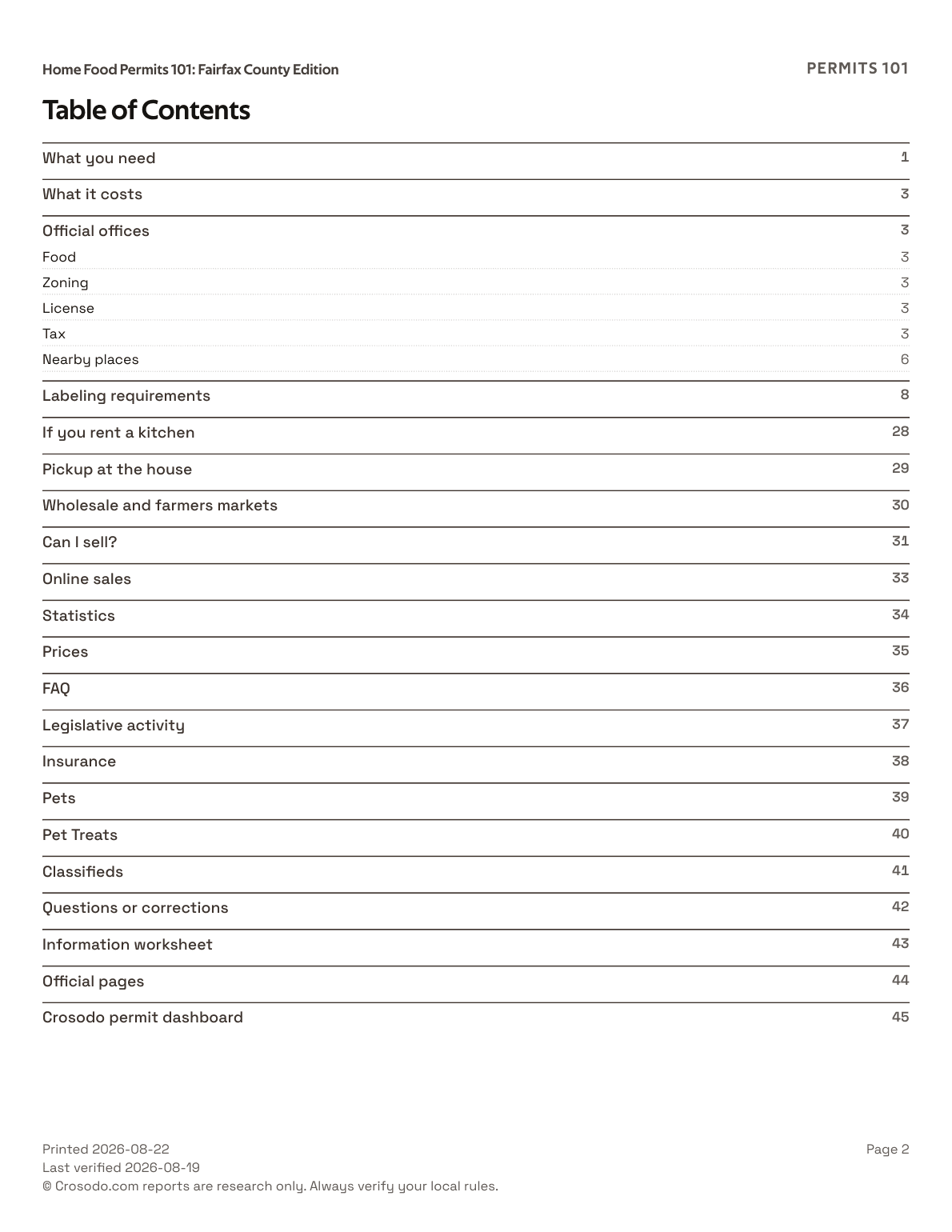
- Full North Carolina statute text with key provisions and official citation
- Allowed and prohibited foods, labeling rules, sales cap (None)
- Registration and permit steps with direct state-agency links
- All 100 North Carolina counties with zoning + health department links
- 283-page guide with every official source URL, licensed to your address
What exactly am I buying?
The complete North Carolina License & Permit Guide — not the free 2-page preview above.
How do I receive it?
Stripe checkout. We email a cover letter, paid receipt, and the guide (PDF) licensed to your address.
Is it current?
Every report lists its official sources so you can verify against the current statute. See also the research-verified North Carolina guide.
Not ready? Get free North Carolina cottage-food updates instead.
02 NCAC 09C .0307 Registration (North Carolina Administrative Code, Title 02 Agriculture and Consumer Services, Chapter 09 Food and Drug Protection, Subchapter C)
Verbatim ExcerptStarting a home-based food business If you are interested in producing and selling food products for human consumption from your home, you will need to first have your home kitchen inspected before doing so. This includes anyone selling to retail stores, restaurants, or directly to consumers. This also includes anyone opening and repackaging food products or ingredients purchased from other locations. Low risk foods are the only products allowed to be processed in your home kitchen. Low risk food products are items that are shelf stable and do not require refrigeration or freezing. These low-risk food products may include: Baked goods that do not require refrigeration; Jams, jellies, and preserves; Candies; Dried mixes/Spices; Some liquids (i.e. ice tea, coffee, lemonade, etc.); Some sauces (i.e. balsamic dressing, etc.); Acid and acidified foods (i.e. pickles, BBQ sauce, etc.); Freeze dried fruits/vegetables. High risk food products ARE NOT PERMITTED to be produced in your home kitchen and can only be produced commercially under our routine inspection program.
Source: ncagr.gov/divisions/food-drug-protection/food-program/fdpd-food-program-home-processer →
Shelf-stable, low-risk foods including non-refrigerated baked goods, jams, jellies, preserves, candies, dried mixes, spices, some beverages, some sauces, acidified foods (pickles, BBQ sauce), and freeze-dried fruits/vegetables are permitted. Sauces and dehydrated foods may require pH or water activity testing to confirm shelf stability.
Refrigerated or frozen products, low-acid canned foods, dairy products, seafood, bottled water/juice, and bakery products with cream or cream cheese fillings or cheesecakes are prohibited. Products must be shelf-stable; pet animals in the home disqualify the applicant entirely.
Labels required on individually packaged products for self-service sale or wholesale: product name, ingredient list in descending order by weight, net quantity, processor name and address, and all allergens. Nutritional labels not required unless specific nutrient content claims are made. Products sold directly hand-to-consumer at events may be exempt from affixed labels if ingredient info is available on request.
None
Good (IJ Grade B-)
100
North Carolina Counties (100)
Cottage food registration usually happens at the county level. Click any county for local zoning, health department, and planning department links.
Where to verify North Carolina's rules
Data compiled from primary sources. Cottage food laws change — verify with your state agency before relying on this information.
Cottage food laws are amended every year. This is a starting reference, not legal advice. Verify with North Carolina Department of Agriculture and Consumer Servicesand your local health department before relying on this data.