
Cottage food law & license in Guilford County, NC
Reviewed · Guide (PDF) emailed after checkout · Yours to keep
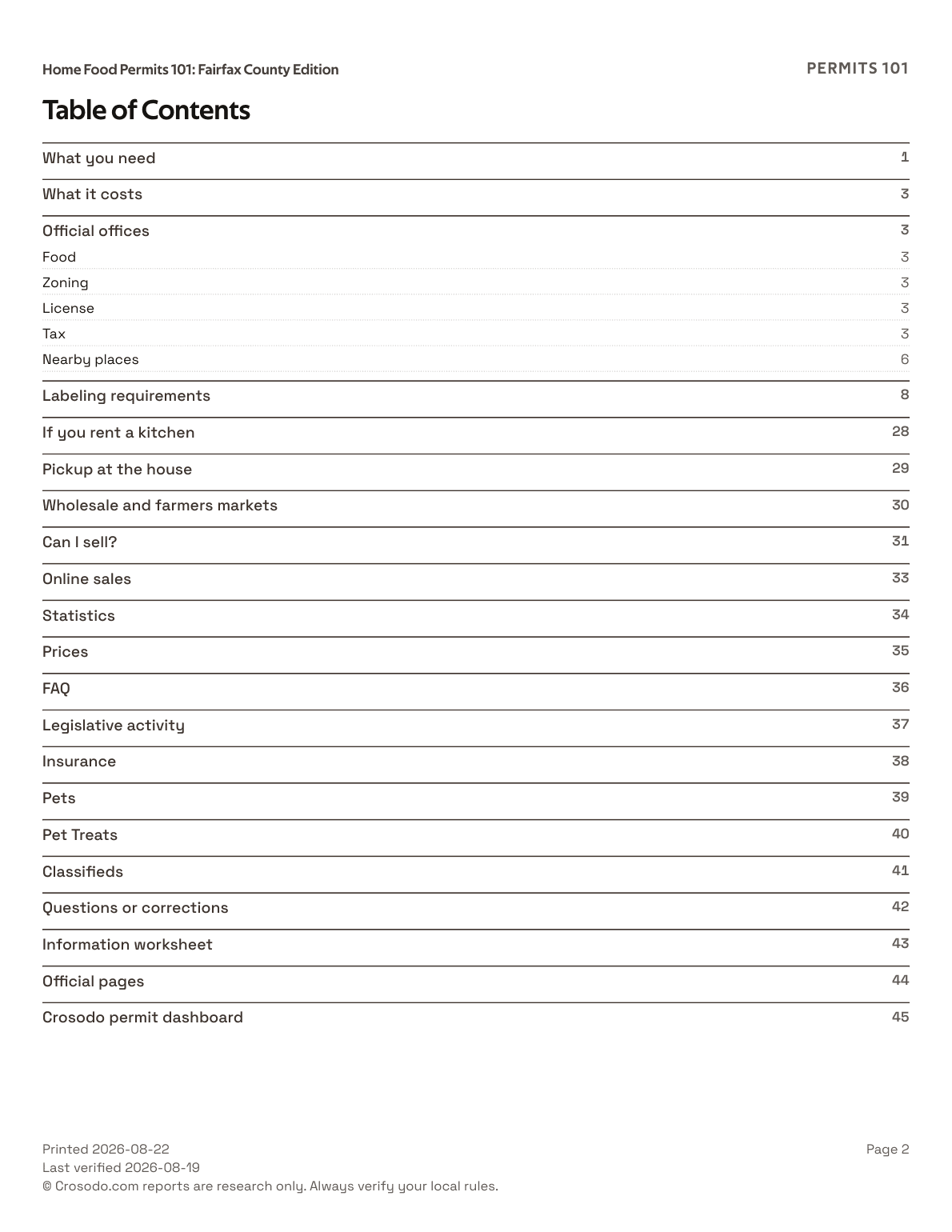
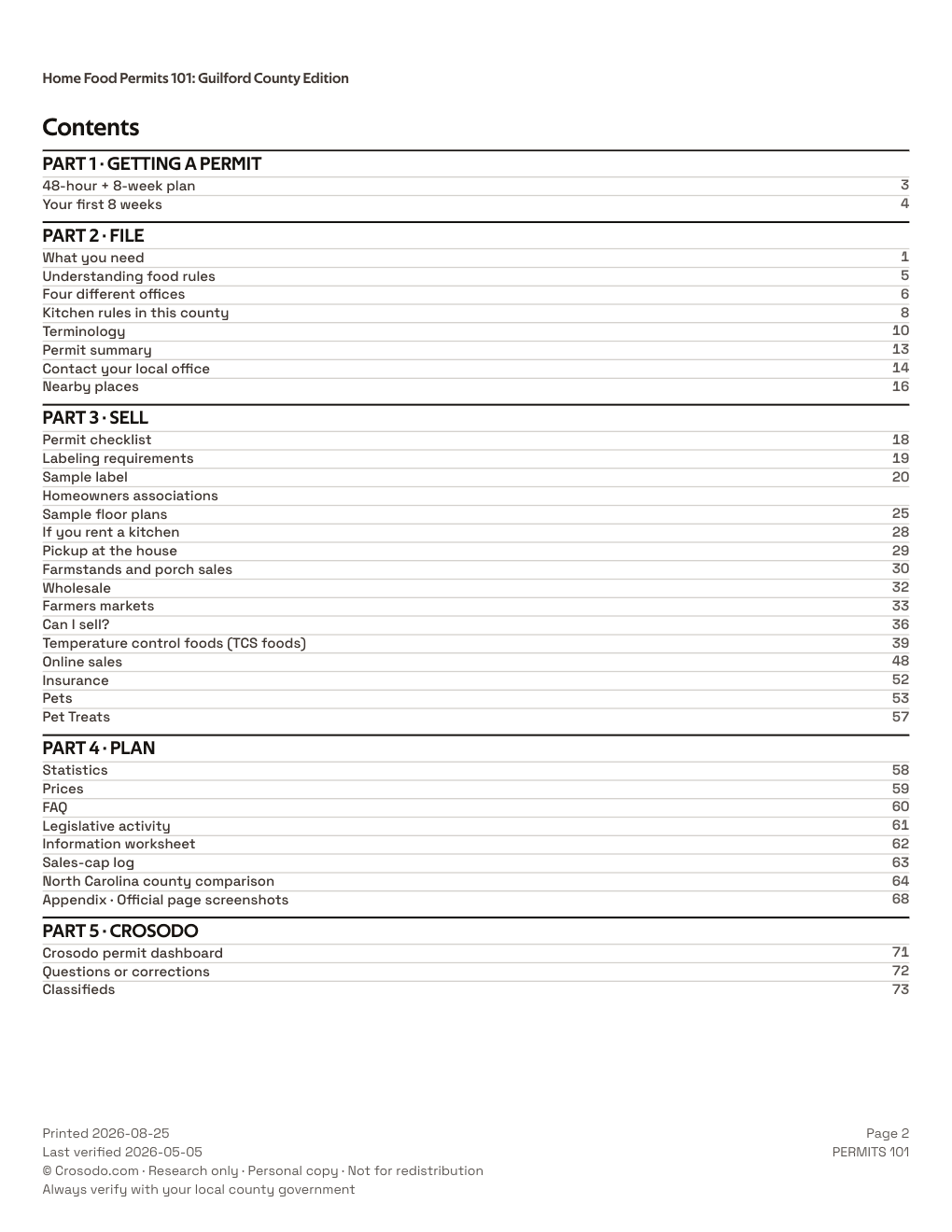
Guilford County Permits 101 for Guilford County, North Carolina (73 pages). After you pay, you get lifetime access to premium dashboard features. Unlock the permit planning workspace on your dashboard.
North Carolina cottage food — common first products
County zoning cannot expand a state ban. Check the product, then the local rules on this page.
What's in the Guilford County permit report

How to start in Guilford County
Permit, label, and local steps for selling under North Carolina cottage food rules in Guilford County. Not legal advice.
Confirm your menu under state law
North Carolina cottage food rules control what you may make at home (Shelf-stable, low-risk foods including non-refrigerated baked goods, jams, jellies, preserves, candies, dried mixes, spices, some beverages, some sauces, acidified foods (pickles, BBQ sauce), and freeze-dried fruits/vegetables are permitted. Sauces and dehydrated foods may require pH or water activity testing to confirm shelf stability.). Guilford County cannot expand a food the state bans.
Map channels and local sales rules
State sales cap: No cap. On-site / porch pickup in Guilford County: Yes. Prefer markets or off-site pickup if residential customer traffic is restricted.
Local permits, tax, and home occupation
Home occupation permit: Yes. Many places still need a general business license or tax certificate even when the state has no cottage food “permit.” Check planning, the clerk, and any HOA or lease before advertising your address.
Training, registration, inspection
State registration: Yes. Local inspection in Guilford County: Yes. Finish food handler training early — markets often ask for a copy.
Labels that match the state
Print labels with North Carolina disclaimer and allergen rules before market day. Use the free North Carolina label page for the one-pager checklist and mockup.
Insurance and first sales
Farmers markets often require a certificate of insurance. Soft-launch with pre-orders, keep a sales log, and re-verify rules if you change products or venues.
What usually goes on the package
- Product name (common or usual name of the food)
- Business or producer name
- Producer address (or address alternative your state allows)
- Ingredients in descending order by weight
- Major allergen disclosures (e.g. wheat, milk, eggs, soy, tree nuts, peanuts, fish, shellfish, sesame)
- Net weight or quantity
- Home-kitchen disclaimer required by North Carolina (exact wording may be set by statute or agency)
Planning checklist only. Confirm with state and local agencies before you sell.
Guilford County is a county in North Carolina (pop. 539,557). Under North Carolina's Good-tier cottage food law (sales cap: None), home bakers must still clear local zoning and health rules in this county. Registration path: Yes. Start with North Carolina Department of Agriculture and Consumer Services (state cottage food page linked below), then confirm Guilford County health and planning requirements. Local notes for Guilford County: home kitchen allowed; inspection required; home occupation permit required. Guilford County confirms food catering as permitted home occupation; 25% area limit; one non-occupant employee; one 4 sq ft sign. NC state requires annual kitchen inspection and explicitly bars pets from kitchen. NC home processor program allows direct and wholesale sales with no sales cap. State requires local zoning check. for both county zoning and state requirements. Download the free reports below for a portable summary, and always re-check official sources before you sell.
Guilford County cottage food reports
Home cottage-food permit stack — zoning, health, license, and what the state does not require.

Zoning, permits, health department rules, and local sources for Guilford County.
Download county report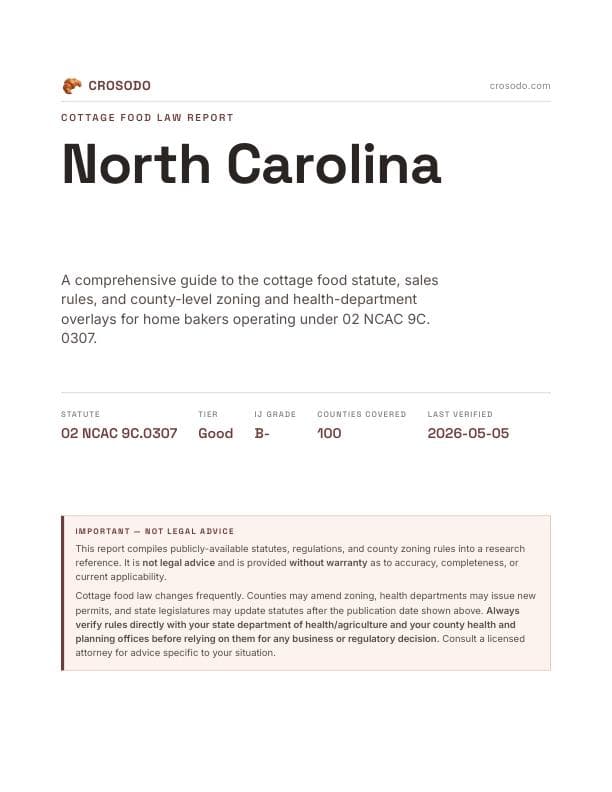
Full North Carolina License & Permit Guide (283 pages). Statute, all counties, and official source links.
Tier: Good
North Carolina has a Good-tier cottage food law — solid baseline with moderate restrictions, typically a high sales cap (often $50K+) and standard direct-to-consumer rules. Workable for most home bakers with reasonable scale plans.
North Carolina cottage food law →Health department
Many states delegate cottage food registration and inspection to the county health department. Contact theirs for the local process.
Home occupation rules
The county or city zoning code governs whether you can run a home-based food business — customer visits, signage, employees, floor area.
Home kitchen, inspection, and zoning rules for Guilford County
State baseline: 02 NCAC 9C.0307
- Home kitchen allowed
- Yes
- Restrictions
- Annual inspection of home kitchen required by NC Department of Agriculture. Pets prohibited from home kitchen during food preparation/storage. Kitchen must be clean, constructed of suitable materials, free of pest activity. Detached structures (garage, basement) do not qualify.
- Separate dedicated kitchen
- No
- Pet restrictions
- Pets prohibited in home kitchen; indoor pets are considered pests and are not permitted under NC home processing program
- Water supply
- Municipal or private water supply inspected as part of kitchen inspection
- Handwashing
- Required per kitchen inspection standards
- Food storage
- Kitchen must be in main home dwelling only; no detached structures
- Inspection required
- Yes
- Inspection trigger
- Annual kitchen inspection required before and during operation. Inspectors from NC Department of Agriculture conduct inspections. Notice of Inspection provided; major violations may disqualify from home-based food business.
- Home occupation permit
- Yes
- Permit details
- NC NCDA&CS Home Processor program requires producers to 'contact your local planning/zoning department to determine if you are permitted to operate a food business from your home and if permits are required.' Guilford County Home Occupation Bulletin retrieved from official guilfordcountync.gov confirms: Home occupations permitted in AG, RS, RM, MXU, NB zones; requires Home Occupation Permit via Guilford County EPL (Civic Access Portal); food catering is listed as a permitted example; up to 25% of gross floor area; no outdoor storage; one 4 sq ft freestanding sign (no permit needed); one non-occupant employee may work at residence; must contact Planner at 336-641-3334. Also check with HOA/leasing office.
- Local business license
- Varies
- On-site customer pickup
- Yes
- On-site signage
- Yes
- Delivery / pickup
- Direct sales to consumers, wholesale to retail stores and restaurants. No annual sales cap. Buyers may come to home for pickup. Online sales and delivery permitted within North Carolina. Interstate sales allowed through some channels.
- Max employees in home
- Guilford County home occupation: only one non-occupant employee may work at/come to the residence
- Relevant code section
- Guilford County Home Occupation Bulletin (guilfordcountync.gov); 02 NCAC 9C.0307.
Guilford County confirms food catering as permitted home occupation; 25% area limit; one non-occupant employee; one 4 sq ft sign. NC state requires annual kitchen inspection and explicitly bars pets from kitchen. NC home processor program allows direct and wholesale sales with no sales cap. State requires local zoning check. for both county zoning and state requirements.
02 NCAC 09C .0307 Registration (North Carolina Administrative Code, Title 02 Agriculture and Consumer Services, Chapter 09 Food and Drug Protection, Subchapter C)
Full North Carolina License & Permit Guide →Verbatim excerptStarting a home-based food business If you are interested in producing and selling food products for human consumption from your home, you will need to first have your home kitchen inspected before doing so. This includes anyone selling to retail stores, restaurants, or directly to consumers. This also includes anyone opening and repackaging food products or ingredients purchased from other locations. Low risk foods are the only products allowed to be processed in your home kitchen. Low risk food products are items that are shelf stable and do not require refrigeration or freezing. These low-risk food products may include: Baked goods that do not require refrigeration; Jams, jellies, and preserves; Candies; Dried mixes/Spices; Some liquids (i.e. ice tea, coffee, lemonade, etc.); Some sauces (i.e. balsamic dressing, etc.); Acid and acidified foods (i.e. pickles, BBQ sauce, etc.); Freeze dried fruits/vegetables. High risk food products ARE NOT PERMITTED to be produced in your home kitchen and can only be produced commercially under our routine inspection program.
Source: ncagr.gov/divisions/food-drug-protection/food-program/fdpd-food-program-home-processer →
Guilford County Permit Guide $26
This page stays free — the Guilford County statute, zoning notes, and official links. Permit Guide 101 is the paid packet (73 pages): the home cottage-food permit stack (zoning, health, and business license), the checklist, and the dashboard workspace. That packet is not on this free page.
Guilford County cottage food — FAQ
Do I need a permit to sell cottage food in Guilford County, North Carolina?
Home occupation permit: Yes. NC NCDA&CS Home Processor program requires producers to 'contact your local planning/zoning department to determine if you are permitted to operate a food business from your home and if permits are required.' Guilford County Home Occupation Bulletin retrieved from official guilfordcountync.gov confirms: Home occupations permitted in AG, RS, RM, MXU, NB zones; requires Home Occupation Permit via Guilford County EPL (Civic Access Portal); food catering is listed as a permitted example; up to 25% of gross floor area; no outdoor storage; one 4 sq ft freestanding sign (no permit needed); one non-occupant employee may work at residence; must contact Planner at 336-641-3334. Also check with HOA/leasing office. State cottage food registration may also apply — check the North Carolina guide at https://crosodo.com/states/north-carolina.
Is a health inspection required for home bakers in Guilford County?
Inspection: Yes. Trigger: Annual kitchen inspection required before and during operation. Inspectors from NC Department of Agriculture conduct inspections. Notice of Inspection provided; major violations may disqualify from home-based food business.. Non-TCS baked goods are often exempt from kitchen inspection under state cottage food law, but local rules can differ.
What foods can I sell under North Carolina cottage food law in Guilford County?
Shelf-stable, low-risk foods including non-refrigerated baked goods, jams, jellies, preserves, candies, dried mixes, spices, some beverages, some sauces, acidified foods (pickles, BBQ sauce), and freeze-dried fruits/vegetables are permitted. Sauces and dehydrated foods may require pH or water activity testing to confirm shelf stability. County zoning does not expand the state product list — if a food is banned by North Carolina, it stays banned. Verify with the state agency before selling.
What is the sales cap for cottage food in North Carolina?
North Carolina state law lists cottage food sales at None. There is typically no separate county sales cap, but local permits or zoning can still limit operations.
Do I need a home occupation permit in Guilford County?
Home occupation permit: Yes. NC NCDA&CS Home Processor program requires producers to 'contact your local planning/zoning department to determine if you are permitted to operate a food business from your home and if permits are required.' Guilford County Home Occupation Bulletin retrieved from official guilfordcountync.gov confirms: Home occupations permitted in AG, RS, RM, MXU, NB zones; requires Home Occupation Permit via Guilford County EPL (Civic Access Portal); food catering is listed as a permitted example; up to 25% of gross floor area; no outdoor storage; one 4 sq ft freestanding sign (no permit needed); one non-occupant employee may work at residence; must contact Planner at 336-641-3334. Also check with HOA/leasing office.
The free county page is the short version. This is the full North Carolina License & Permit Guide (283 pages) — statute, every county we have researched, and official source URLs. Stripe checkout. Cover letter, paid receipt, and the guide (PDF) licensed to your address.
Unlimited Pass. Your journey to getting permitted for cottage food sales. Premium dashboard tools, unlimited state and county reports, and the 50-state label report. Lifetime access. Includes the full North Carolina License & Permit Guide (283 pages).
Where to verify Guilford County rules
Guilford County vs. bordering counties
| Regulation | Guilford County This county | Forsyth County | Alamance County |
|---|---|---|---|
| Home kitchen allowed | Yes | Conditional | Yes |
| Separate dedicated kitchen | No | No | No |
| Pets allowed | Pets prohibited in home kitchen; indoor pets are considered pests and are not permitted under NC home processing program | Pets anywhere in the home DISQUALIFY the applicant entirely from the NC Home Processor program. | Pets in home disqualify applicant entirely per GMP requirements (21 CFR 117 Subpart B). |
| Inspection required | Yes | Yes | Yes |
| On-site customer pickup | Yes | Yes | Yes |
| On-site signage | Yes | Conditional | Conditional |
| Delivery / pickup | Direct sales to consumers, wholesale to retail stores and restaurants. No annual sales cap. Buyers may come to home for pickup. Online sale… | Direct and indirect sales permitted (NC allows wholesale). Online and mail order permitted. Annual inspection required for all sales. No sa… | Direct sales at home, farmers markets, and retail stores. Online permitted. No sales cap. |
| Home occupation permit | Yes | Yes | Conditional |
| Local business license | Varies | Yes | Varies |
| Restrictions | Annual inspection of home kitchen required by NC Department of Agriculture. Pets prohibited from home kitchen during food preparation/stora… | North Carolina Home Processor program (02 NCAC 9C.0307) requires annual registration with NCDA&CS and annual home kitchen inspection. Allow… | Annual kitchen inspection required by NCDA&CS. Registration required. Pets in the home disqualify the applicant. Shelf-stable, low-risk foo… |
| Food storage | Kitchen must be in main home dwelling only; no detached structures | Shelf-stable non-refrigerated products only. Sauces and dehydrated foods may require pH or water activity testing. | Shelf-stable storage; products must not require refrigeration. |
| Population | 539,557 | 383,739 | 171,779 |
Guilford County baker discussion
53 public threads from bakers talking about Guilford County — permits, zoning, markets, and what's selling. Read along or sign in to post.
Other North Carolina counties
Resources for cottage food and home bakers
Supplies, courses, insurance, farmers markets, kitchen rentals, and local services. To advertise here, visit crosodo.com/advertise. Browse all classifieds.
Advertise here
Packaging, labels, baking tools, bulk ingredients, and equipment for cottage food operators. Reach home bakers across the country.
crosodo.com/advertiseAdvertise here
Baking classes, cottage food business training, workshops, and food safety education. Reach home bakers across the country.
crosodo.com/advertiseAdvertise here
Product liability, home bakery, market vendor, and small food business insurance. Reach home bakers across the country.
crosodo.com/advertiseAdvertise in Guilford County, North Carolina
Reach home bakers in Guilford County, North Carolina. Supply stores, farmers markets, kitchen rentals, co-packer referrals, and bakery services are welcome.
Learn about placementsYour business here
Local cottage food listings, community kitchens, farmers market dates, and non-profit events can be submitted for review.
Post in the local discussionAds are paid placements. Crosodo does not endorse listed vendors. Verify all product, service, course, insurance, and legal information independently.
Cottage food law and municipal zoning interact in non-obvious ways. Before investing in equipment or marketing, talk to North Carolina's department of agriculture, your local health department, and your county or city's planning office. Crosodo is a clothing brand for cottage bakers, not a law firm.
Local bakers discuss zoning, permits, top sellers, sourdough, farmers markets, and more in the Crosodo forum.