
New Hampshire Cottage Food Law PDF 2026 — Full Legal Text + Annotations
Full statute text, allowed foods, registration, sales cap Tiered, and all 10 New Hampshire counties with zoning + health department links. 39-page PDF with official sources. Free preview below — buy the complete guide for $44.
This page shows the first 2 pages + statute excerpt. One-time $44 · Yours to keep · Stripe checkout · Guide (PDF) emailed with receipt.
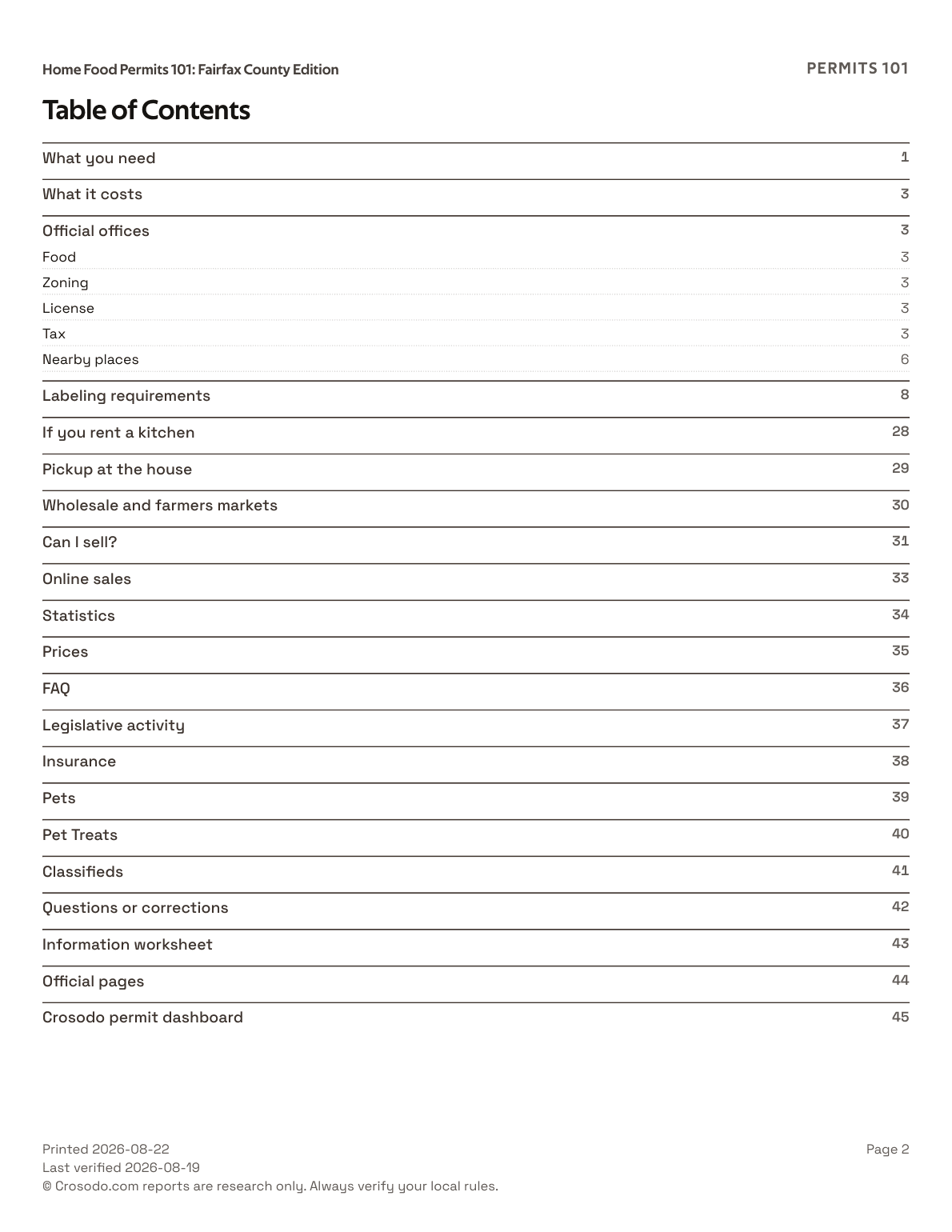
- Full New Hampshire statute text with key provisions and official citation
- Allowed and prohibited foods, labeling rules, sales cap (Tiered)
- Registration and permit steps with direct state-agency links
- All 10 New Hampshire counties with zoning + health department links
- 39-page guide with every official source URL, licensed to your address
What exactly am I buying?
The complete New Hampshire License & Permit Guide — not the free 2-page preview above.
How do I receive it?
Stripe checkout. We email a cover letter, paid receipt, and the guide (PDF) licensed to your address.
Is it current?
Every report lists its official sources so you can verify against the current statute. See also the research-verified New Hampshire guide.
Not ready? Get free New Hampshire cottage-food updates instead.
New Hampshire Revised Statutes Annotated Title X — Public Health, Chapter 143-A — Food Service Licensure, Section 143-A:12 — Homestead Food License Required
Verbatim Excerpt143-A:12 Homestead Food License Required. I. In this subdivision: (a) "Homestead food operation" means a person who produces homestead food products, excluding potentially hazardous food, only in the home kitchen of that person's primary residence in New Hampshire. (b) "Potentially hazardous food" means foods requiring temperature control for safety because they are capable of supporting the rapid growth of pathogenic or toxigenic microorganisms, and the growth of toxin production of clostridium botulinum. Potentially hazardous foods also include processed acidified and low acid canned foods. (c) "Homestead food products" means all food except potentially hazardous food, and as defined in rule by the commissioner of the department of health and human services through rulemaking under RSA 143-A:13. II. Homestead food operations selling less than the maximum annual gross sales of food as defined in RSA 143-A:5, VII, excluding potentially hazardous food, from the homestead residence, at the owner's own farm stand, at farmers' markets, or at retail food stores are exempt from licensure and departmental inspection under this subdivision, except that the department may inspect when the department has reason to suspect an imminent health hazard as defined in RSA 143-A:3, IV-b. III. Homestead food operations that exceed the maximum annual gross sales of food as defined in RSA 143-A:5, VII or homestead food operations who wish to sell food products, excluding potentially hazardous food, to restaurants or other retail food establishments, over the Internet, by mail order, or to wholesalers, brokers, or other food distributors who will resell the homestead product shall be licensed under RSA 143-A:4. IV. All homestead food products sold in packages from the home kitchen, farm stand of a homestead food operation, at farmers' markets, or at retail food stores shall have individual labels on each package containing the following information: name, address, and phone number of the homestead food operation; name of the homestead food product; the ingredients of the homestead product, in descending order of predominance by weight; and allergy information. Products made by homestead food operations exempt from licensure shall also be clearly labeled with the following statement: "This product is exempt from New Hampshire licensing and inspection." Products made by nonexempt homestead food operations shall also be clearly labeled with the following statement: "This product is made in a residential kitchen licensed by the New Hampshire Department of Health and Human Services."
Source: law.justia.com/codes/new-hampshire/2023/title-x/chapter-143-a/section-143-a-12/ →
Non-potentially-hazardous homestead food products prepared in the operator's primary home kitchen may be sold from the homestead residence, at the owner's farm stand, at farmers markets, and at retail food stores without a license (below the sales threshold). Above the sales threshold, or for sales to restaurants, via internet/mail order, or to wholesalers, a Class H Homestead License ($150 fee) is required.
Potentially hazardous foods — those requiring temperature control for safety, including processed acidified and low-acid canned foods — cannot be produced or sold under the homestead food framework. Operations selling above the annual gross sales threshold set in RSA 143-A:5(VII) must obtain a license.
All packaged homestead food products must be labeled with: name, address, and phone number of the operation; product name; ingredients in descending order by weight; allergen information. Exempt operations must also state: 'This product is exempt from New Hampshire licensing and inspection.' Licensed operations must state: 'This product is made in a residential kitchen licensed by the New Hampshire Department of Health and Human Services.' Net weight/volume in US customary and metric, and a product code/batch number, are also required. Label must include a 10-point font disclosure statement.
Tiered
Good (IJ Grade C)
10
New Hampshire Counties (10)
Cottage food registration usually happens at the county level. Click any county for local zoning, health department, and planning department links.
Where to verify New Hampshire's rules
Data compiled from primary sources. Cottage food laws change — verify with your state agency before relying on this information.
Cottage food laws are amended every year. This is a starting reference, not legal advice. Verify with New Hampshire Department of Health and Human Servicesand your local health department before relying on this data.