
New Jersey Cottage Food Law PDF 2026 — Full Legal Text + Annotations
Full statute text, allowed foods, registration, sales cap 50000, and all 21 New Jersey counties with zoning + health department links. 69-page PDF with official sources. Free preview below — buy the complete guide for $44.
This page shows the first 2 pages + statute excerpt. One-time $44 · Yours to keep · Stripe checkout · Guide (PDF) emailed with receipt.
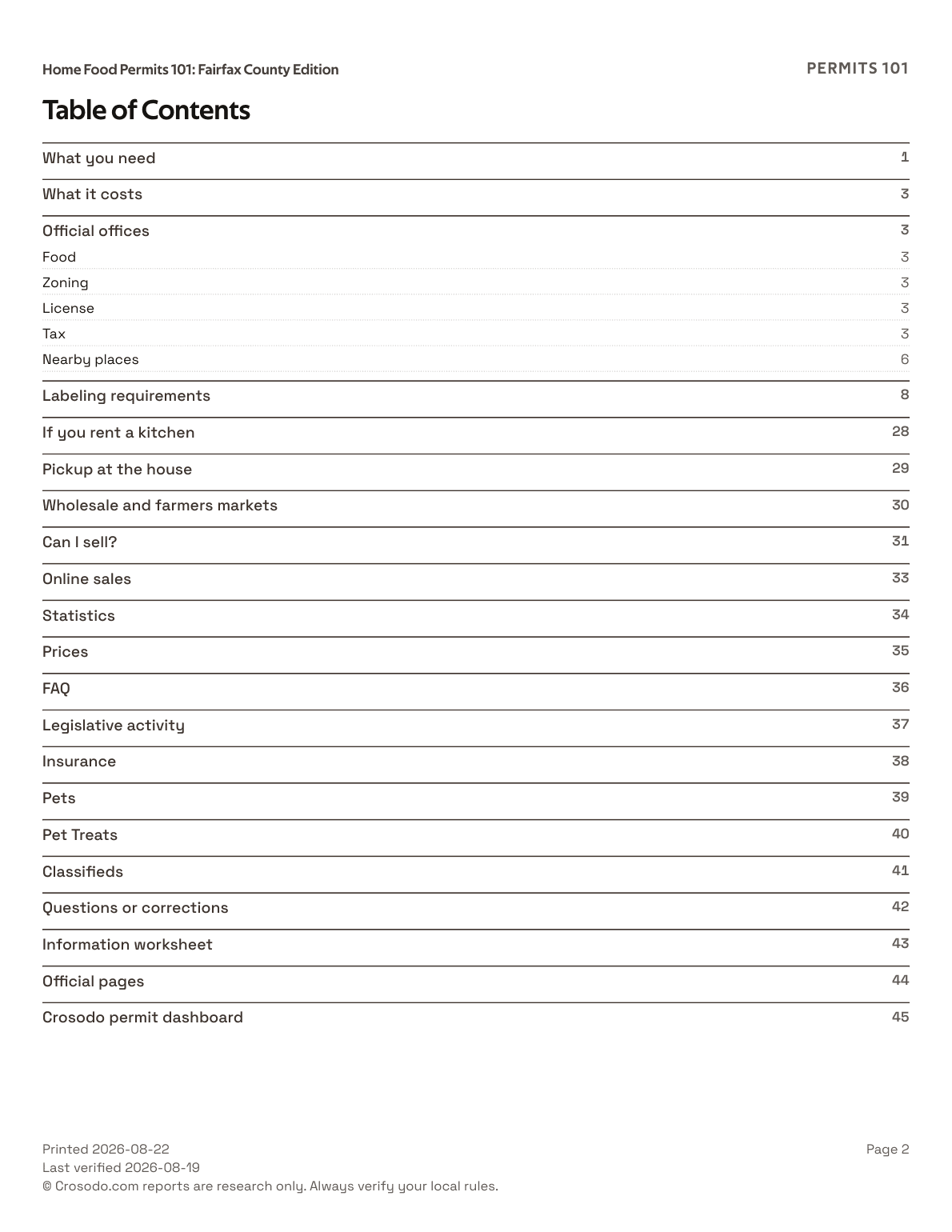
- Full New Jersey statute text with key provisions and official citation
- Allowed and prohibited foods, labeling rules, sales cap (50000)
- Registration and permit steps with direct state-agency links
- All 21 New Jersey counties with zoning + health department links
- 69-page guide with every official source URL, licensed to your address
What exactly am I buying?
The complete New Jersey License & Permit Guide — not the free 2-page preview above.
How do I receive it?
Stripe checkout. We email a cover letter, paid receipt, and the guide (PDF) licensed to your address.
Is it current?
Every report lists its official sources so you can verify against the current statute. See also the research-verified New Jersey guide.
Not ready? Get free New Jersey cottage-food updates instead.
New Jersey Administrative Code Title 8, Chapter 24, Subchapter 11 — Cottage Food Operator Permit (Sanitation in Retail Food Establishments, Food and Beverage Vending Machines and Cottage Food Operations)
Verbatim Excerpt§ 8:24-11.1 Requirement and procedure to obtain a Cottage Food Operator Permit (a) A person or entity that engages in the production, distribution, and/or sale of food to consumers shall: 1. Have a Cottage Food Operator Permit; or 2. Comply with applicable laws to retail food establishments. § 8:24-11.2 Authorized cottage food operator activity (a) A Cottage Food Operator Permit authorizes a holder thereof: 1. To produce cottage food products in the private kitchen of the operator's residence and at no other location; and 2. Subject to N.J.A.C. 8:24-11.5, to distribute cottage food products to consumers thereof without being subject to initial or periodic inspection by a health authority and other requirements applicable to retail food establishments pursuant to this chapter. § 8:24-11.3 Prohibited cottage food operator activity (b) The gross annual sales (that is, before deductions of taxes and operating expenses) that a cottage food operator generates from the sale of cottage food products shall not exceed $ 50,000. § 8:24-11.6 Application fees; permit duration; permit renewal (a) The fee to apply for a Cottage Food Operator Permit is $ 100.00. (b) A Cottage Food Operator Permit is valid for two years from date of issuance. (c) The fee to apply for renewal of a Cottage Food Operator Permit is $ 100.00. § 8:24-11.4 Cottage food point-of-sale notice, packaging, and labeling (c) A cottage food operator shall affix one or more labels or tags on cottage food that collectively state at least: the common name of the cottage food product; list of ingredients in descending order of predominance by weight; allergens statement; Cottage Food Operator's name and business name; Cottage Food Operator's Permit number; town or municipality and 'NJ'; and the statement: 'this food is prepared pursuant to N.J.A.C. 8:24-11 in a home kitchen that has not been inspected by the Department of Health.'
Source: nj.gov/health/cottagefood/rules-resources/rules/ →
Non-TCS (non-time/temperature-control-for-safety) foods prepared in the operator's private home kitchen are allowed, including: baked goods (bread, cakes, cupcakes, cookies), candy and brittle, chocolate-covered nuts and dried fruit, dried fruit, dried herbs and seasonings, dried pasta, dry baking mixes, fruit jams/jellies/preserves, fruit pies and empanadas (excluding pumpkin), fudge, granola/cereal/trail mix, honey and sweet sorghum syrup, nuts and nut mixtures, nut butters, popcorn and caramel corn, roasted coffee and dried tea, vinegar and mustard, waffle cones and pizzelles, and other non-TCS foods upon written application.
All TCS (time/temperature-control-for-safety) foods are prohibited, including items requiring refrigeration. Cottage food products may not be sold to wholesale food establishments or retail food establishments for resale. Dog treats and pet food are excluded. Gross annual sales may not exceed $50,000.
Each package must be labeled with: common product name; ingredients in descending order by weight; allergen statement ('Contains' plus listed allergens); operator's name and business name; permit number; town/municipality and 'NJ'; and the required disclosure: 'this food is prepared pursuant to N.J.A.C. 8:24-11 in a home kitchen that has not been inspected by the Department of Health.' At point-of-sale locations other than operator's or consumer's home, a placard must also be displayed.
50000
Poor (IJ Grade D)
21
New Jersey Counties (21)
Cottage food registration usually happens at the county level. Click any county for local zoning, health department, and planning department links.
Where to verify New Jersey's rules
Data compiled from primary sources. Cottage food laws change — verify with your state agency before relying on this information.
Cottage food laws are amended every year. This is a starting reference, not legal advice. Verify with New Jersey Department of Healthand your local health department before relying on this data.