
Arkansas Cottage Food Law PDF 2026 — Full Legal Text + Annotations
Full statute text, allowed foods, registration, sales cap None, and all 75 Arkansas counties with zoning + health department links. 224-page PDF with official sources. Free preview below — buy the complete guide for $44.
This page shows the first 2 pages + statute excerpt. One-time $44 · Yours to keep · Stripe checkout · Guide (PDF) emailed with receipt.
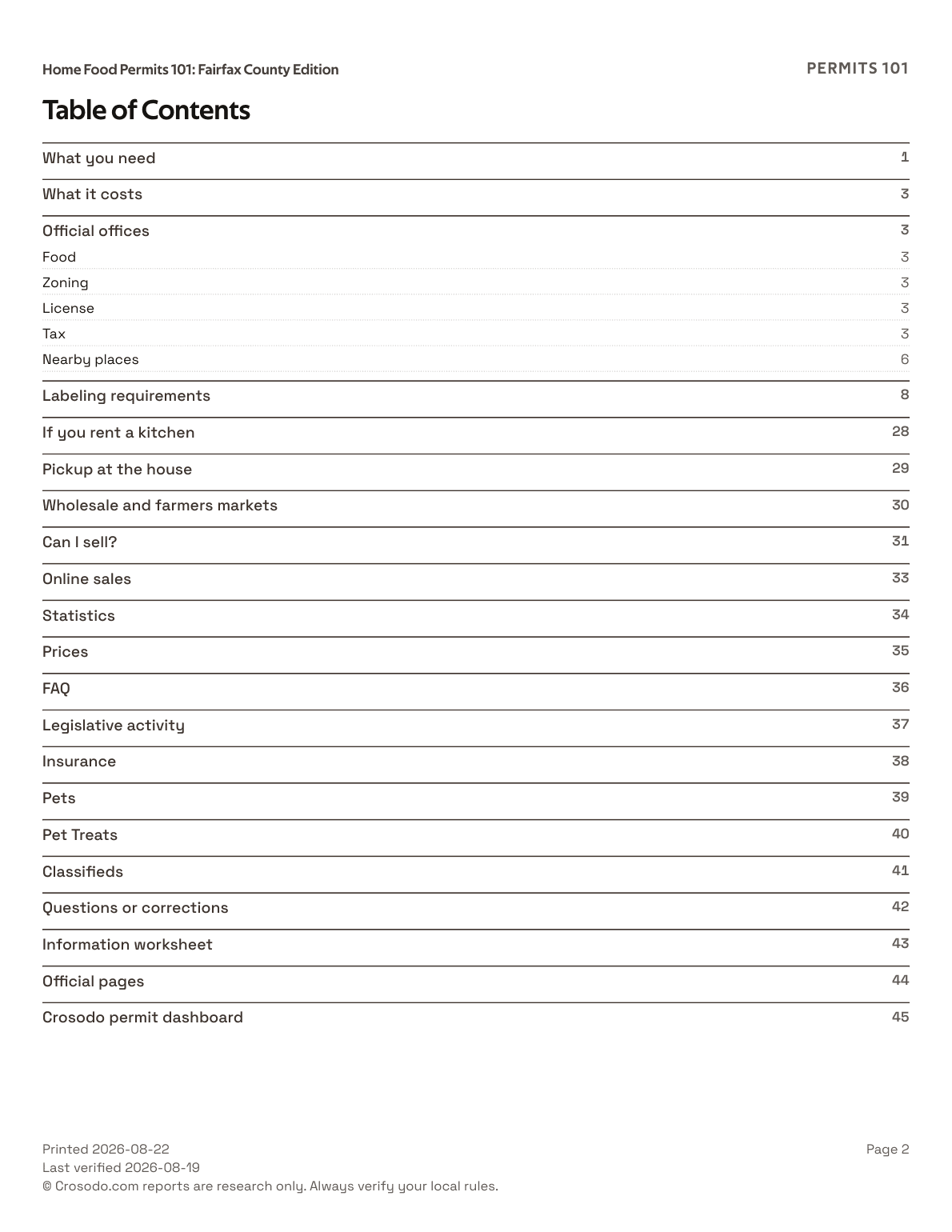
- Full Arkansas statute text with key provisions and official citation
- Allowed and prohibited foods, labeling rules, sales cap (None)
- Registration and permit steps with direct state-agency links
- All 75 Arkansas counties with zoning + health department links
- 224-page guide with every official source URL, licensed to your address
What exactly am I buying?
The complete Arkansas License & Permit Guide — not the free 2-page preview above.
How do I receive it?
Stripe checkout. We email a cover letter, paid receipt, and the guide (PDF) licensed to your address.
Is it current?
Every report lists its official sources so you can verify against the current statute. See also the research-verified Arkansas guide.
Not ready? Get free Arkansas cottage-food updates instead.
Arkansas Food Freedom Act (SB 248 / Act 1040)
Verbatim ExcerptSB248 - TO CREATE THE FOOD FREEDOM ACT; AND TO EXEMPT CERTAIN PRODUCERS OF HOMEMADE FOOD OR DRINK PRODUCTS FROM LICENSURE, CERTIFICATION, AND INSPECTION. Under the food freedom law, producers can sell their homemade food almost anywhere, including sales through grocery and retail stores. Even interstate sales are allowed. Producers can sell almost any type of nonperishable food, though producers who sell acidified foods (e.g. pickles) must follow additional requirements. There is no sales limit, and a producer does not need to get a permit from the health department. The food freedom law specifically prevents state and local governments from restricting home food producers. Products must be sold to an informed end consumer. For instance, a grocery or retail store could sell your products to their customers, who are end consumers and can see your product labels. If you want to sell pickles or other acidified foods, you must ensure that the final pH level of the product is 4.6 or below by doing one of the following: Use a recipe from an approved source; Get your product tested in a lab; Test each batch with a calibrated pH meter.
Source: arkleg.state.ar.us/Bills/Detail?ddBienniumSession=2021%2F2021R&measureno=SB248 →
Producers may sell almost any nonperishable, non-potentially hazardous food directly to consumers, including baked goods, candies, condiments, dry goods, preserves, fermented foods, carbonated drinks, and snacks. Interstate sales are permitted and retail/wholesale channels are allowed as long as an informed end consumer is the final buyer.
Prohibited foods include perishable baked goods, low-acid canned goods, nut butters, oils, and meat jerkies. Acidified foods such as pickles require pH testing (final pH at or below 4.6) and batch-number labeling with production records.
Labels must include the producer's name, address, and phone number (or a state ag department ID number as an alternative), and all required product information. Online listings must display the same labeling information. Acidified foods require a unique batch number on labels.
None
Freedom (IJ Grade B+)
75
Arkansas Counties (75)
Cottage food registration usually happens at the county level. Click any county for local zoning, health department, and planning department links.
Where to verify Arkansas's rules
Data compiled from primary sources. Cottage food laws change — verify with your state agency before relying on this information.
Cottage food laws are amended every year. This is a starting reference, not legal advice. Verify with Arkansas Department of Healthand your local health department before relying on this data.