Alabama Cottage Food Law PDF 2026 — Full Legal Text + Annotations
Full statute text, allowed foods, registration, sales cap None, and all 67 Alabama counties with zoning + health department links. 189-page PDF with official sources. Free preview below — buy the complete guide for $44.
This page shows the first 2 pages + statute excerpt. One-time $44 · Yours to keep · Stripe checkout · Guide (PDF) emailed with receipt.
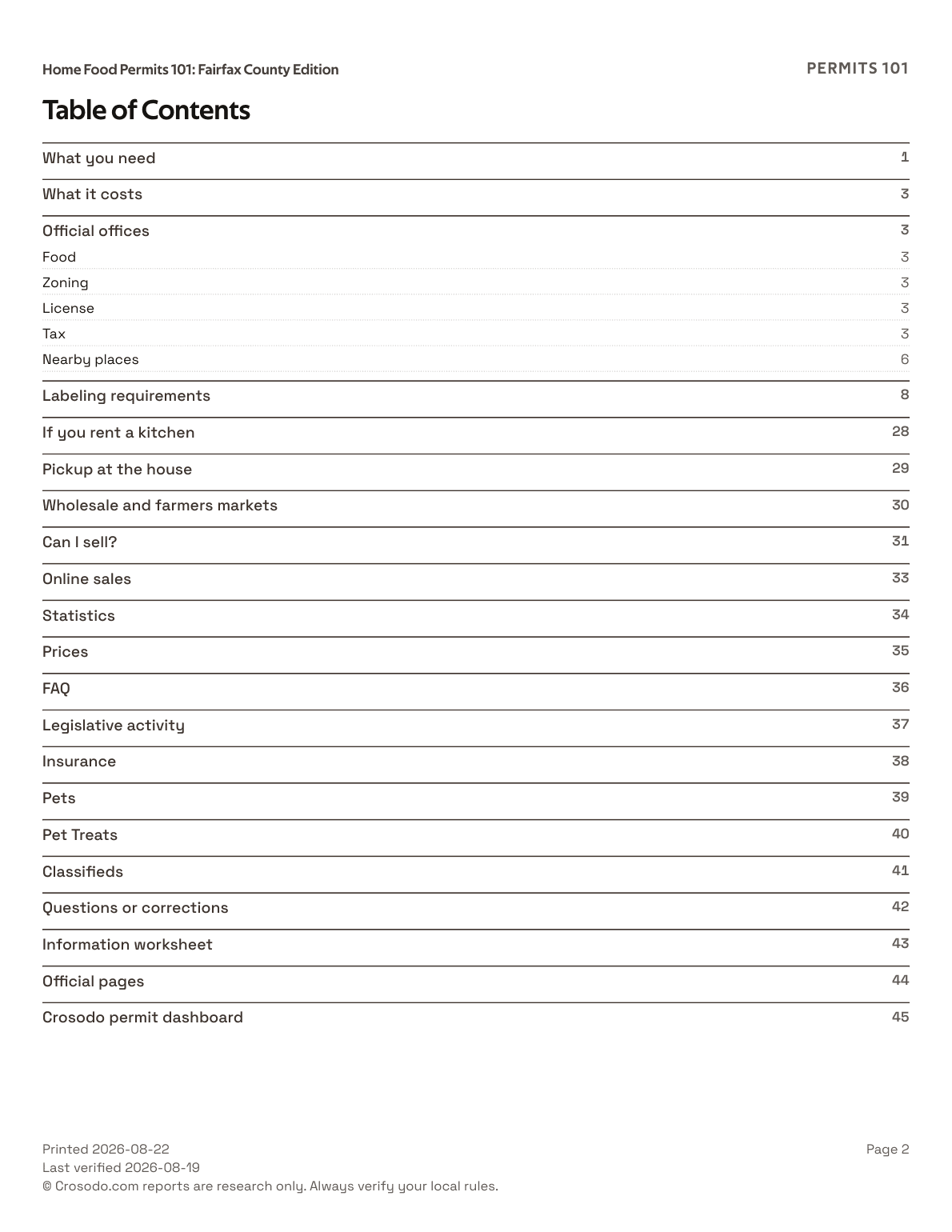
- Full Alabama statute text with key provisions and official citation
- Allowed and prohibited foods, labeling rules, sales cap (None)
- Registration and permit steps with direct state-agency links
- All 67 Alabama counties with zoning + health department links
- 189-page guide with every official source URL, licensed to your address
What exactly am I buying?
The complete Alabama License & Permit Guide — not the free 2-page preview above.
How do I receive it?
Stripe checkout. We email a cover letter, paid receipt, and the guide (PDF) licensed to your address.
Is it current?
Every report lists its official sources so you can verify against the current statute. See also the research-verified Alabama guide.
Not ready? Get free Alabama cottage-food updates instead.
Alabama Cottage Food Production Law
Verbatim Excerpt(a) For purposes of this section, the following words have the following meanings: (1) COTTAGE FOOD. A non-potentially hazardous food that has been prepared in a person's home that does not require time or temperature control for safety to limit pathogenic microorganism growth or toxin formation and that does not include meat, poultry, or fish. The term includes all of the following: a. Cakes, breads, Danish pastries, donuts, pastries, and pies. b. Jam, jellies, and fruit preserves. c. Candy. d. Dried and dehydrated herbs, herb mixes, vegetables, or fruits. e. Roasted coffee. f. Dried baking mixes. g. Fermented or preserved vegetables or fruit that do not result in the production of alcohol and that have an acidity level allowed by the department. (2) COTTAGE FOOD PRODUCTION OPERATION. A person operating out of his or her home who meets the following requirements: a. Produces cottage food for sale. b. Sells the foods produced under paragraph a. only directly to consumers, whether in-person, by phone, or online, in the state. c. Delivers the foods produced under paragraph a. directly to consumers in the state, whether in person, through an agent of the producer, or by mail. (b) A cottage food production operation is not a food service establishment and is not required to have a food service permit issued by the county health department. (c) Neither the State Department of Public Health nor a county health department may regulate the production of food at a cottage food production operation except as provided by this section.
Source: law.justia.com/codes/alabama/title-22/title-1/chapter-20/section-22-20-5-1/ →
Allowed foods include non-potentially hazardous foods such as baked goods (cakes, breads, pastries, pies), jams and jellies, candy, dried herbs and vegetables, roasted coffee, dried baking mixes, and fermented/preserved vegetables or fruit with an approved acidity level. Online and in-state shipping are permitted as of the 2021 amendment.
Prohibited foods include meat, poultry, and fish products, all perishable or temperature-controlled foods, low-acid canned goods, and juices. Acidified foods such as pickles require pH testing by an approved authority before sale. Freeze-dried foods require water-activity testing.
Labels must include in at least 10-point font: the common or usual name of the food, the producer's name and home or P.O. Box address, a statement that the food is not inspected by the department or local health department, all ingredients in descending order of predominance, and a disclaimer that the food may contain allergens.
None
Good (IJ Grade B)
67
Alabama Counties (67)
Cottage food registration usually happens at the county level. Click any county for local zoning, health department, and planning department links.
Where to verify Alabama's rules
Data compiled from primary sources. Cottage food laws change — verify with your state agency before relying on this information.
Cottage food laws are amended every year. This is a starting reference, not legal advice. Verify with Alabama Department of Public Healthand your local health department before relying on this data.