Mississippi cottage food law
Last updated: · Research verified · Full guide $44 lifetime (285 pages)
Tier: Good. Solid baseline with moderate restrictions — typically a high cap (often $50K+) and standard direct-to-consumer rules. Workable for most home bakers.
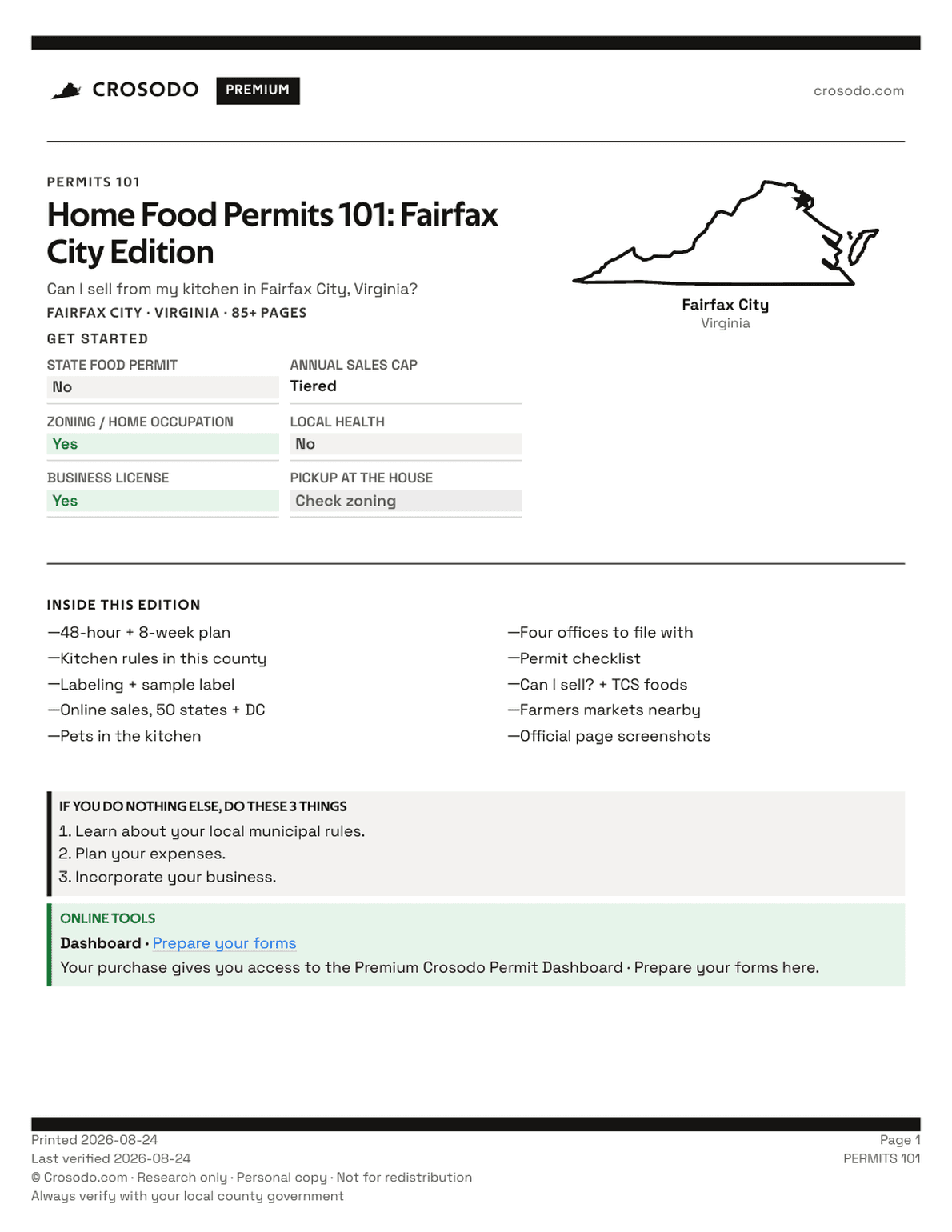
Full Mississippi License & Permit Guide (285 pages). Statute, every county we have researched, and official source URLs. Stripe checkout. Cover letter, paid receipt, and the guide (PDF) licensed to your address.
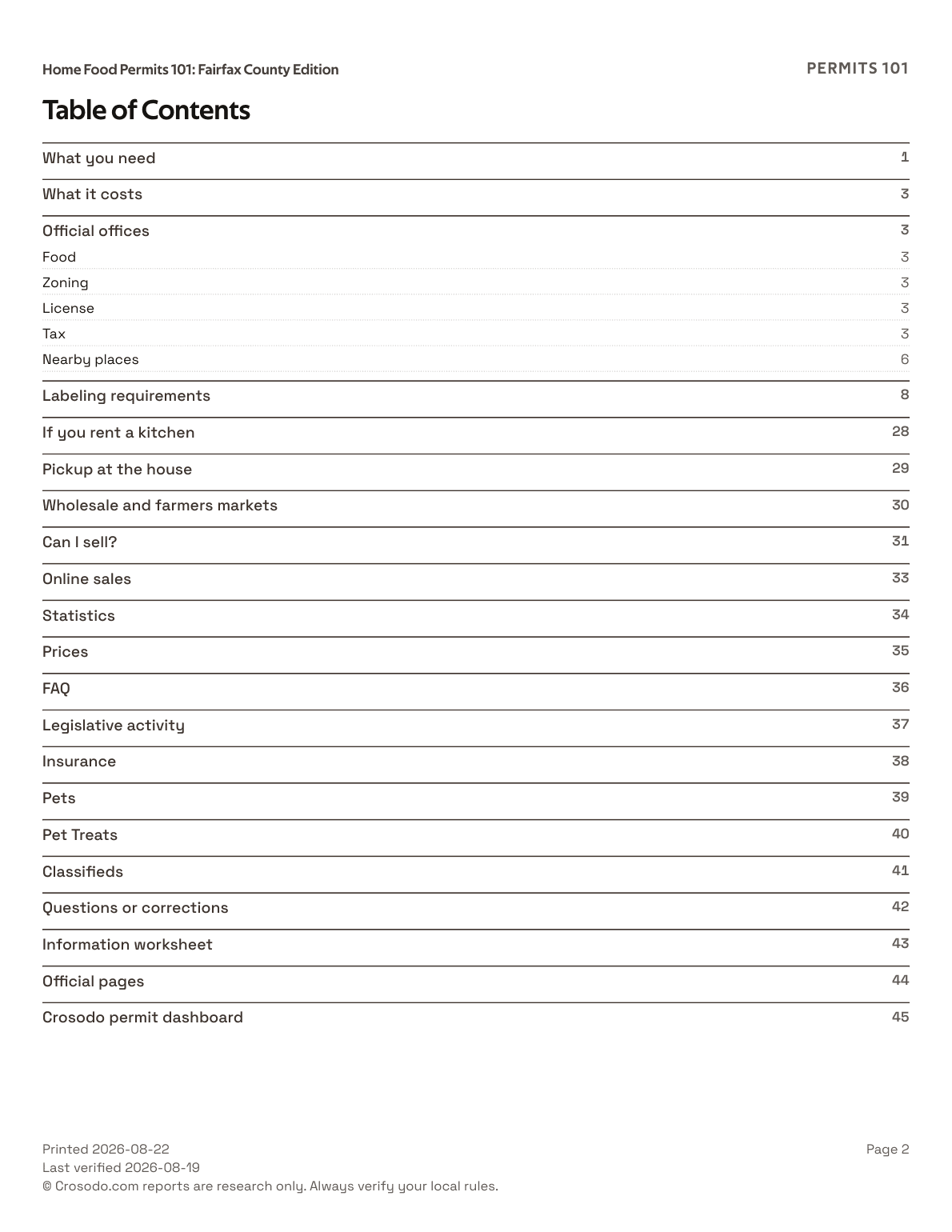
Unlimited Pass. Your journey to getting permitted for cottage food sales. Premium dashboard tools, unlimited state and county reports, and the 50-state label report. Lifetime access. Includes the full Mississippi License & Permit Guide (285 pages).
How to start in Mississippi
A practical path from “am I allowed?” to first sale. Not legal advice — confirm every step with Mississippi agencies and your local offices.
Confirm your products are allowed
Mississippi allows Nonpotentially hazardous food products as defined by the Mississippi State Department of Health, including baked goods (breads, cakes, cookies, pies, donuts), candies, condiments (mustards, nut butters, pickles, vinegars), dry goods (cereals, dried fruit, mixes, pasta, spices), fermented foods, pastries, preserves (jams, jellies), and snacks (caramel corn, chocolate-covered items, crackers, granola, kettle corn, marshmallows, nuts, popcorn). Certain items may require lab testing to confirm non-PHF status.. High-risk or refrigerated foods usually need a commercial kitchen — not a cottage exemption.
Choose sales channels you can actually use
Sales cap: $35,000. Indirect / wholesale-style sales: No. Farmers markets and direct-to-consumer pickup are the usual start. Check county and city rules before advertising porch pickup.
Clear local zoning, licenses, and tax IDs
State cottage food rules are the floor. Your city or county may still require a business license, home occupation approval, HOA permission, or sales tax registration. Do this before you print an address on Instagram.
Registration, training, and kitchen rules
State registration: No. Food handler / training: No. Kitchen inspection: Upon-complaint. Complete certificates the market or agency will ask for.
Build compliant labels
Use the Mississippi label requirements on this site (and the free template). Match disclaimer language to the statute or agency guide before you print a batch.
Soft-launch, then first paid sales
Keep a simple sales log from day one so you stay under any annual cap. Soft-launch with pre-orders before a full market day.
Verify with official sources
Re-check the state cottage food page and your local health / planning office before you invest in equipment or marketing. Rules change.
What usually goes on the package
- Product name (common or usual name of the food)
- Business or producer name
- Producer address (or address alternative your state allows)
- Ingredients in descending order by weight
- Major allergen disclosures (e.g. wheat, milk, eggs, soy, tree nuts, peanuts, fish, shellfish, sesame)
- Net weight or quantity
- Home-kitchen disclaimer: “Made in a cottage food operation that is not subject to Mississippi's food safety regulations.”
This is a planning checklist compiled for home bakers. It is not legal, tax, or zoning advice.
Mississippi vs neighboring cottage food laws
Tier and sales-cap snapshot for Mississippi and nearby states. Click through for full rules, labeling, and county pages.
| State | Tier | Sales cap | Guide |
|---|---|---|---|
| MississippiYou are here | Good | 35000 | This page |
| Alabama | Good | None | Alabama law → |
| Arkansas | Freedom | None | Arkansas law → |
| Louisiana | Okay | 30000 | Louisiana law → |
| Tennessee | Good | None | Tennessee law → |
Need a compliant product label for Mississippi? Open the Mississippi label mockup.
35000
Nonpotentially hazardous food products as defined by the Mississippi State Department of Health, including baked goods (breads, cakes, cookies, pies, donuts), candies, condiments (mustards, nut butters, pickles, vinegars), dry goods (cereals, dried fruit, mixes, pasta, spices), fermented foods, pastries, preserves (jams, jellies), and snacks (caramel corn, chocolate-covered items, crackers, granola, kettle corn, marshmallows, nuts, popcorn). Certain items may require lab testing to confirm non-PHF status.
Registration: No. Food handler cert: No.
Mississippi Code 1972 §75-29-951 - Regulation of Cottage Food Operations (Title 75, Chapter 29, Article 21)
Verbatim excerpt(1)(a) A cottage food operation must comply with the applicable requirements of this section but is exempt from the permitting requirements of Section 41-3-18 if the cottage food operation complies with this section and has annual gross sales of cottage food products that do not exceed Thirty-five Thousand Dollars ($35,000.00). (b) For purposes of this subsection, a cottage food operation's annual gross sales include all sales of cottage food products at any location, regardless of the types of products sold or the number of persons involved in the operation. A cottage food operation must provide the department, upon request, with written documentation to verify the operation's annual gross sales. (2) A cottage food operation may not sell cottage food products over the Internet, by mail order, or at wholesale or to a retail establishment; however, this does not prohibit the advertising of cottage food products over the Internet, including through social media. Cottage food products are nonpotentially hazardous food products as defined by the department. (3) A cottage food operation may only sell cottage food products which are prepackaged with a label affixed that contains the following information: (a) The name and address of the cottage food operation; (b) The name of the cottage food product; (c) The ingredients of the cottage food product, in descending order of predominance by weight; (d) The net weight or net volume of the cottage food product; (e) Allergen information as specified by federal labeling requirements; (f) Appropriate nutritional information as specified by federal labeling requirements, if any nutritional claim is made; and (g) The following statement printed in at least ten-point type in a color that provides a clear contrast to the background of the label: "Made in a cottage food operation that is not subject to Mississippi's food safety regulations." (5)(b) Only upon receipt of a complaint, the department's authorized officer or employee may enter and inspect the premises of a cottage food operation to determine compliance with this section and department rules.
Source: law.justia.com/codes/mississippi/title-75/chapter-29/article-21/section-75-29-951/ →
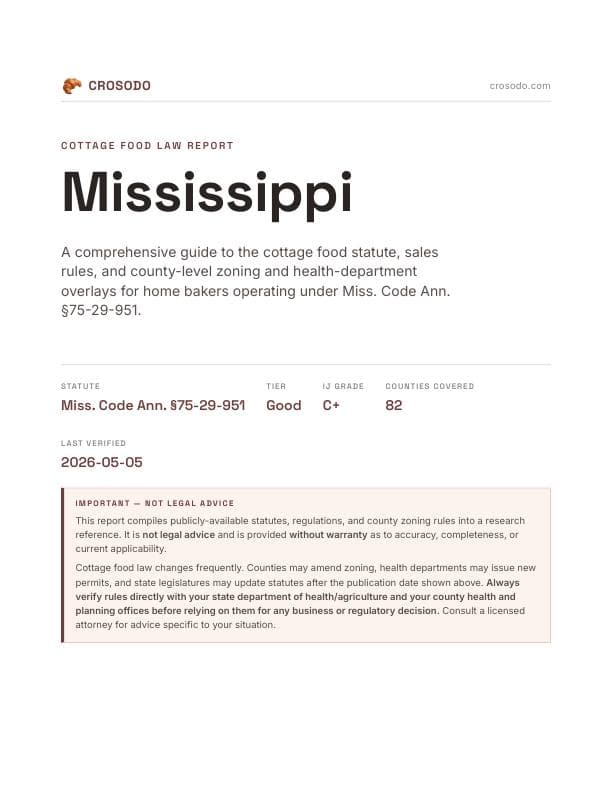
Mississippi Cottage Food Law — 285 pages and 82 counties
The long report for this state (285 pages): statute, every county we've researched, and official source URLs. Stripe checkout. We email a cover letter, paid receipt, and the guide (PDF) licensed to your address.
Print Mississippi labels for your first market
After the law page, this is the next thing most bakers need: a print-ready mockup with the Mississippi home-kitchen disclaimer, allergen line, and net-weight fields.
Made in a cottage food operation that is not subject to Mississippi's food safety regulations.
- Product name, producer, and address (or allowed alternative)
- Ingredients by weight and major allergens
- Net weight / quantity
- Mississippi home-kitchen / “not inspected” disclaimer
Not legal advice. Verify wording with the state agency before a production print run.
Where to verify Mississippi's rules
Mississippi Cottage Food Law — Official Guidance Summary
Official agency guidance changes without notice. The text below is reproduced for reference only — always confirm current rules on the agency website before relying on it.
- Mississippi State Department of Healthhttps://msdh.ms.gov/msdhsite/_static/resources/5375.pdf
Mississippi's cottage food rules are set by Miss. Code Ann. §75-29-951. The summary below is drawn from Crosodo's verified statute research and official agency guidance. Always confirm current requirements on the state agency website before you sell.
Program basics
- Mississippi Code 1972 §75-29-951 - Regulation of Cottage Food Operations (Title 75, Chapter 29, Article 21)
- 35000
- No
- No
- Upon-complaint
Allowed products and sales channels
- Nonpotentially hazardous food products as defined by the Mississippi State Department of Health, including baked goods (breads, cakes, cookies, pies, donuts), candies, condiments (mustards, nut butters, pickles, vinegars), dry goods (cereals, dried fruit, mixes, pasta, spices), fermented foods, pastries, preserves (jams, jellies), and snacks (caramel corn, chocolate-covered items, crackers, granola, kettle corn, marshmallows, nuts, popcorn).
- Certain items may require lab testing to confirm non-PHF status.
- Potentially hazardous foods requiring refrigeration are prohibited. Internet sales, mail order, wholesale, and retail establishment sales are prohibited. Nut butters and juices have been flagged as prohibited by the health department. Perishable baked goods are not permitted.
- Mississippi prohibits Internet sales, mail order, wholesale, and retail establishment sales. Cottage food products may only be sold through in-person direct-to-consumer channels including events, farmers markets, home sales, and roadside stands.
- Advertising on the Internet including social media is permitted even though sales through those channels are not.
Labeling
- All cottage food products must be prepackaged with a label containing: the name and address of the cottage food operation; the product name; ingredients in descending order by weight; net weight or volume; allergen information per federal requirements; nutritional information if any nutritional claim is made; and the statement in at least 10-point type: 'Made in a cottage food operation that is not subject to Mississippi's food safety regulations.'
Statute excerpt
- (1)(a) A cottage food operation must comply with the applicable requirements of this section but is exempt from the permitting requirements of Section 41-3-18 if the cottage food operation complies with this section and has annual gross sales of cottage food products that do not exceed Thirty-five Thousand Dollars ($35,000.00).
- (b) For purposes of this subsection, a cottage food operation's annual gross sales include all sales of cottage food products at any location, regardless of the types of products sold or the number of persons involved in the operation. A cottage food operation must provide the department, upon request, with written documentation to verify the operation's annual gross sales.
- (2) A cottage food operation may not sell cottage food products over the Internet, by mail order, or at wholesale or to a retail establishment; however, this does not prohibit the advertising of cottage food products over the Internet, including through social media. Cottage food products are nonpotentially hazardous food products as defined by the department.
- (3) A cottage food operation may only sell cottage food products which are prepackaged with a label affixed that contains the following information: (a) The name and address of the cottage food operation; (b) The name of the cottage food product; (c) The ingredients of the cottage food product, in descending order of predominance by weight; (d) The net weight or net volume of the cottage food product; (e) Allergen information as specified by federal labeling requirements; (f) Appropriate nutritional information as specified by federal labeling requirements, if any nutritional claim is made; and (g) The following statement printed in at least ten-point type in a color that provides a clear contrast to the background of the label: "Made in a cottage food operation that is not subject to Mississippi's food safety regulations." (5)(b) Only upon receipt of a complaint, the department's authorized officer or employee may enter and inspect the premises of a cottage food operation to determine compliance with this section and department rules.
Official sources
- State agency cottage food page: https://msdh.ms.gov/page/30,0,76.html
- Statute: https://law.justia.com/codes/mississippi/title-75/chapter-29/article-21/section-75-29-951/
Summarized from official Mississippi cottage food statute research and agency guidance. Agency rules change — verify on the official site before relying on this information.
Mississippi Counties
82 counties tracked. Pick yours for the local zoning + health department links.
View all 82 counties →City zoning rules in Mississippi
City zoning rules apply on top of the state cottage food law — home occupation, customer pickup, signage, and employees.
Permit Guide 101 — $26
This page is the free Mississippi statute. Permit Guide 101 is the paid county packet — pick your county or independent city for the permit stack that is not on this directory page.
Pick your Mississippi county
The Cottage Baker's Field Guide (PDF)
A 6-page reference covering all 51 jurisdictions with methodology and tier explainers — same data as this directory, ready to print and tape to your wall.
Download the PDFWas this page helpful?
Mississippi cottage food law — FAQ
Do I need a license or permit to sell homemade food in Mississippi?
Yes — No. Food handler certification: No.
What foods can I sell under the Mississippi cottage food law?
Nonpotentially hazardous food products as defined by the Mississippi State Department of Health, including baked goods (breads, cakes, cookies, pies, donuts), candies, condiments (mustards, nut butters, pickles, vinegars), dry goods (cereals, dried fruit, mixes, pasta, spices), fermented foods, pastries, preserves (jams, jellies), and snacks (caramel corn, chocolate-covered items, crackers, granola, kettle corn, marshmallows, nuts, popcorn). Certain items may require lab testing to confirm non-PHF status.
Is there a sales cap for cottage food in Mississippi?
35000
How good is Mississippi's cottage food law?
Mississippi is a Good-tier cottage food state by Crosodo's rating criteria. Solid baseline with moderate restrictions — typically a high cap (often $50K+) and standard direct-to-consumer rules. Workable for most home bakers.
Keep exploring Mississippi
Labels, product checks, county zoning, and local discuss — so one state page becomes a full readiness plan.
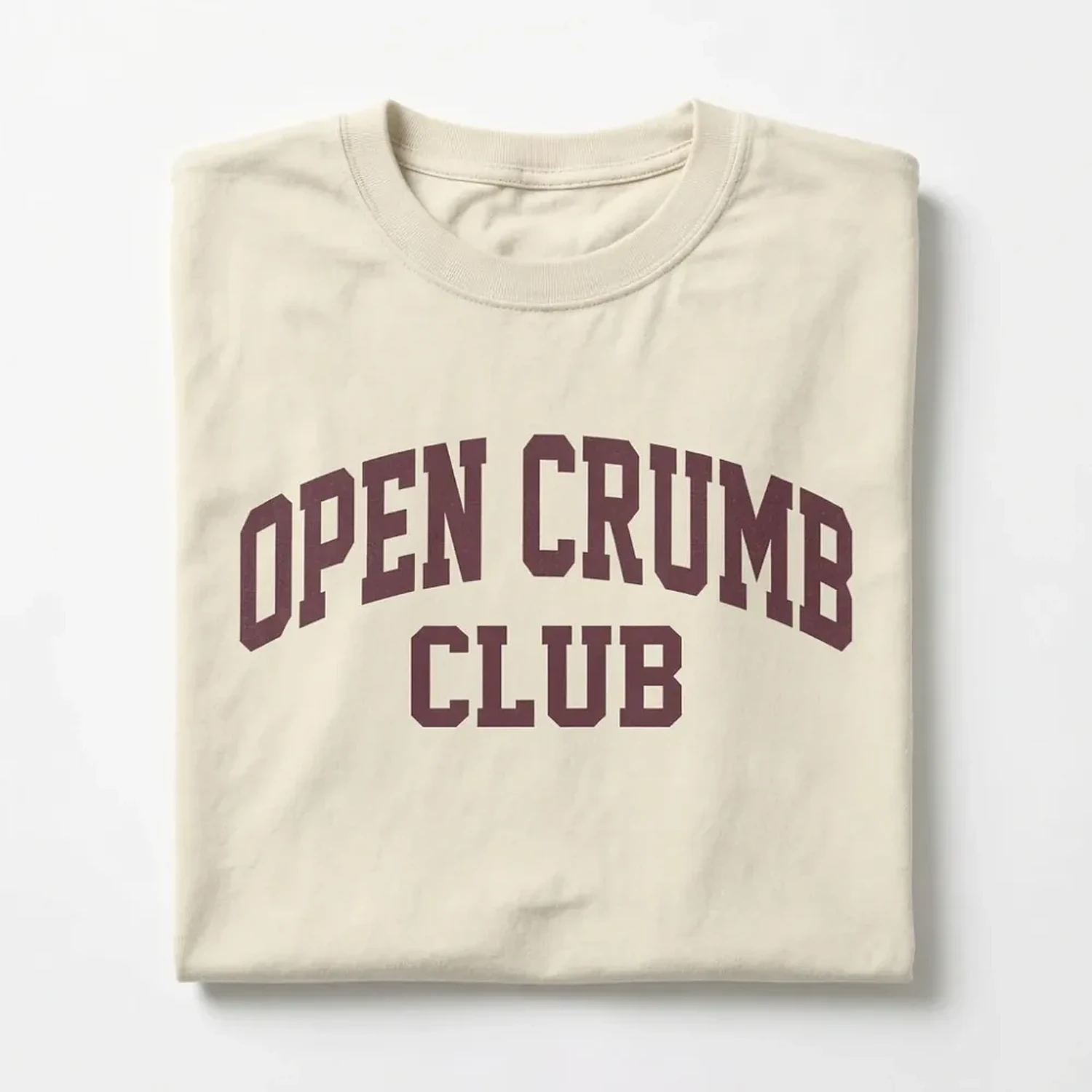
Market-day tees from the Crosodo collection — for the craft, not the algorithm.
What bakers ask about Mississippi
Seed threads for markets, zoning, and labels — join the channel or ask the directory.
Farmers market process in Mississippi?
Which markets welcome cottage bakers, what they charge, and label checks on day one.
Good label printers in Mississippi?
Local print shops or home setups that handle home-kitchen disclaimers cleanly.
Zoning experience in Mississippi counties?
Home occupation, pickup traffic, signage — what did your planning office actually require?
How I got legal in Mississippi
Registration portal tips, food handler cert, and the county step nobody publishes.
Mississippi label wording that passed review
Share real labels (blur personal info) and any county extras beyond the state minimum.
You might like these too
While you're deep in Mississippi rules — vintage-varsity tees for booth days and bake nights.

Resources for cottage food and home bakers
Supplies, courses, insurance, farmers markets, kitchen rentals, and local services. To advertise here, visit crosodo.com/advertise. Browse all classifieds.
Advertise here
Packaging, labels, baking tools, bulk ingredients, and equipment for cottage food operators. Reach home bakers across the country.
crosodo.com/advertiseAdvertise here
Baking classes, cottage food business training, workshops, and food safety education. Reach home bakers across the country.
crosodo.com/advertiseAdvertise here
Product liability, home bakery, market vendor, and small food business insurance. Reach home bakers across the country.
crosodo.com/advertiseAdvertise in Mississippi
Reach home bakers in Mississippi. Supply stores, farmers markets, kitchen rentals, co-packer referrals, and bakery services are welcome.
Learn about placementsYour business here
Local cottage food listings, community kitchens, farmers market dates, and non-profit events can be submitted for review.
Submit a community listingAds are paid placements. Crosodo does not endorse listed vendors. Verify all product, service, course, insurance, and legal information independently.
Cottage food laws are amended every year. This is a starting reference, not legal advice. Verify with Mississippi State Department of Health and your local health department before relying on this data.