
Georgia Cottage Food Law PDF 2026 — Full Legal Text + Annotations
Full statute text, allowed foods, registration, sales cap None, and all 159 Georgia counties with zoning + health department links. 476-page PDF with official sources. Free preview below — buy the complete guide for $44.
This page shows the first 2 pages + statute excerpt. One-time $44 · Yours to keep · Stripe checkout · Guide (PDF) emailed with receipt.
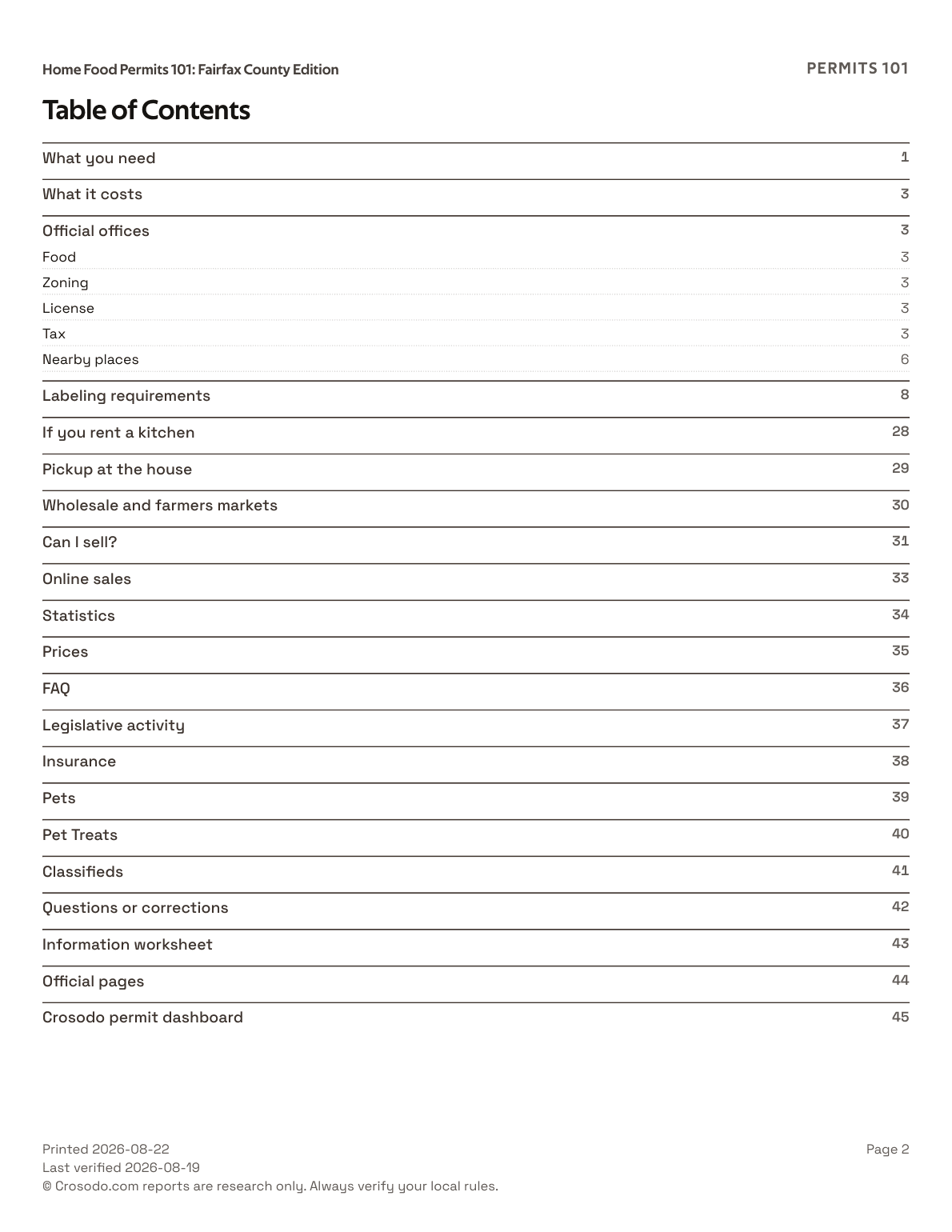
- Full Georgia statute text with key provisions and official citation
- Allowed and prohibited foods, labeling rules, sales cap (None)
- Registration and permit steps with direct state-agency links
- All 159 Georgia counties with zoning + health department links
- 476-page guide with every official source URL, licensed to your address
What exactly am I buying?
The complete Georgia License & Permit Guide — not the free 2-page preview above.
How do I receive it?
Stripe checkout. We email a cover letter, paid receipt, and the guide (PDF) licensed to your address.
Is it current?
Every report lists its official sources so you can verify against the current statute. See also the research-verified Georgia guide.
Not ready? Get free Georgia cottage-food updates instead.
Georgia Code O.C.G.A. §§26-2-470 through 26-2-478 (enacted by HB 398, 2025); formerly Georgia Rules and Regulations Chapter 40-7-19 (Cottage Food Regulations)
Verbatim ExcerptRule 40-7-19-.01 Purpose: The purpose of this Chapter is to allow individuals using home kitchens to prepare, manufacture, and sell non-potentially hazardous foods to the public. Rule 40-7-19-.02 Definitions: (3) 'Cottage food operator' means a person who produces cottage food products only in the home kitchen of that person's primary domestic residence and only for sale directly to the consumer. (4) 'Cottage food products' means non-potentially hazardous baked goods, jams, jellies, preserves, and other non-potentially hazardous foods produced in the home kitchen of a domestic residence. (11) 'Home kitchen' means a kitchen primarily intended for use by the residents of a home. It may contain one or more stoves or ovens, which may be a double oven, designed for residential use. It must not include commercial types of equipment. Rule 40-7-19-.05 Cottage Food Limitations: (1) May only produce non-potentially hazardous foods. Examples include: (a) Loaf breads, rolls, and biscuits; (b) Cakes (except those that require refrigeration due to cream cheese icing, fillings, or high moisture content such as tres leche); (c) Pastries and cookies; (d) Candies and confections; (e) Fruit pies; (f) Jams, jellies, and preserves; (g) Dried fruits; (h) Dry herbs, seasonings and mixtures; (i) Cereals, trail mixes, and granola; (j) Coated or uncoated nuts; (k) Vinegar and flavored vinegars; (l) Popcorn, popcorn balls, and cotton candy.
Source: rules.sos.ga.gov/gac/40-7-19 →
Since July 2025 (HB 398), Georgia allows almost any non-potentially hazardous food, including baked goods, candies, condiments (mustards, nut butters, oils, pickles, syrups, vinegars), dry goods, pastries, preserves, snacks, and carbonated drinks. Georgia also allows interstate sales of cottage food products, which is rare among states.
Prohibited items include perishable baked goods, fruit butters, low-acid canned foods, and meat jerkies. All TCS (time/temperature control for safety) foods requiring refrigeration are not permitted.
Labels must include the business name, address or GDA-issued identification number, phone number, and the statement 'This product was produced at a residential property that is exempt from state inspection. This product may contain allergens.' in at least 10-point type. Operators may obtain a GDA identifier in lieu of a home address.
None
Okay (IJ Grade D+)
159
Georgia Counties (159)
Cottage food registration usually happens at the county level. Click any county for local zoning, health department, and planning department links.
Where to verify Georgia's rules
Data compiled from primary sources. Cottage food laws change — verify with your state agency before relying on this information.
Cottage food laws are amended every year. This is a starting reference, not legal advice. Verify with Georgia Department of Agricultureand your local health department before relying on this data.